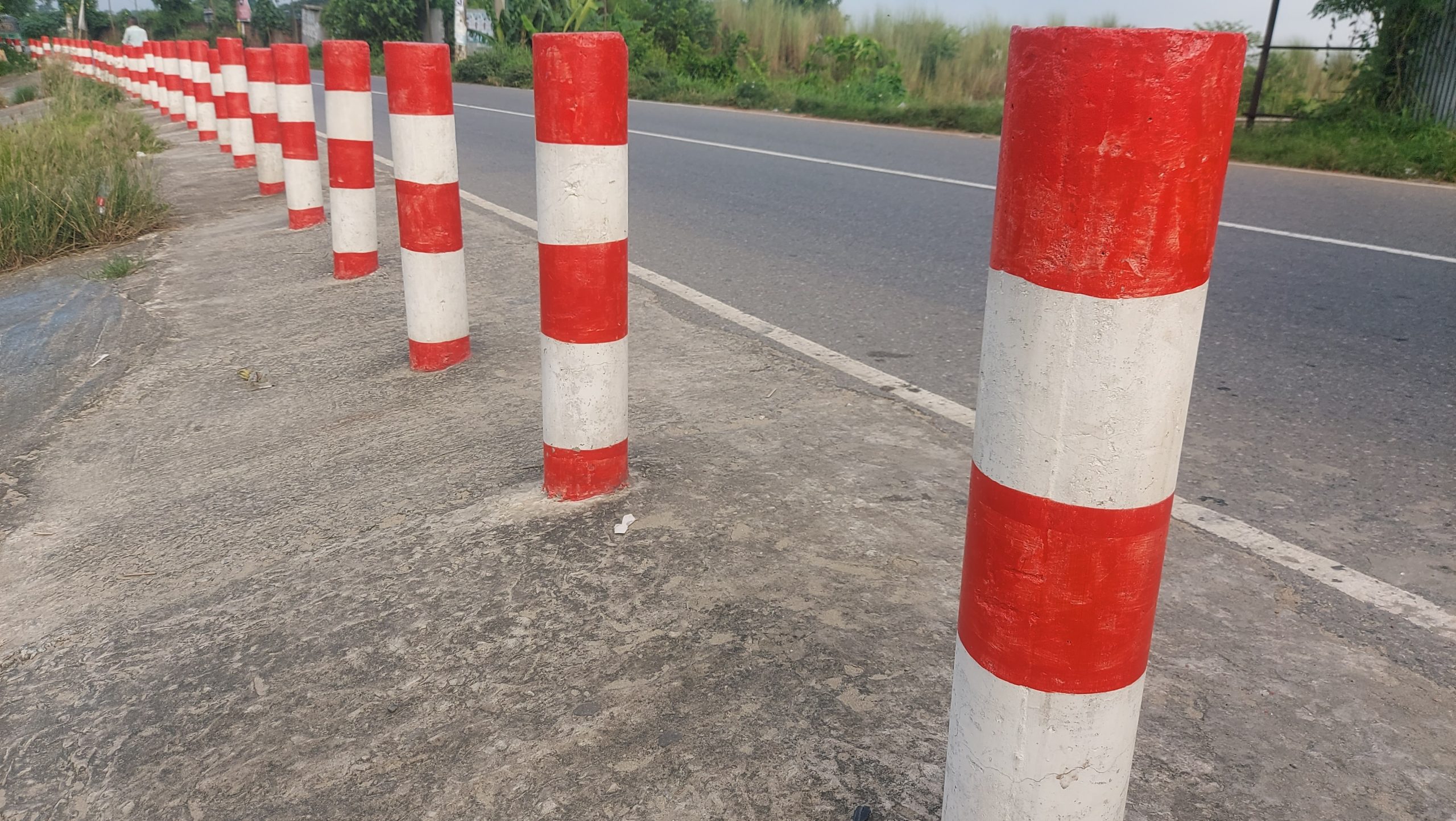
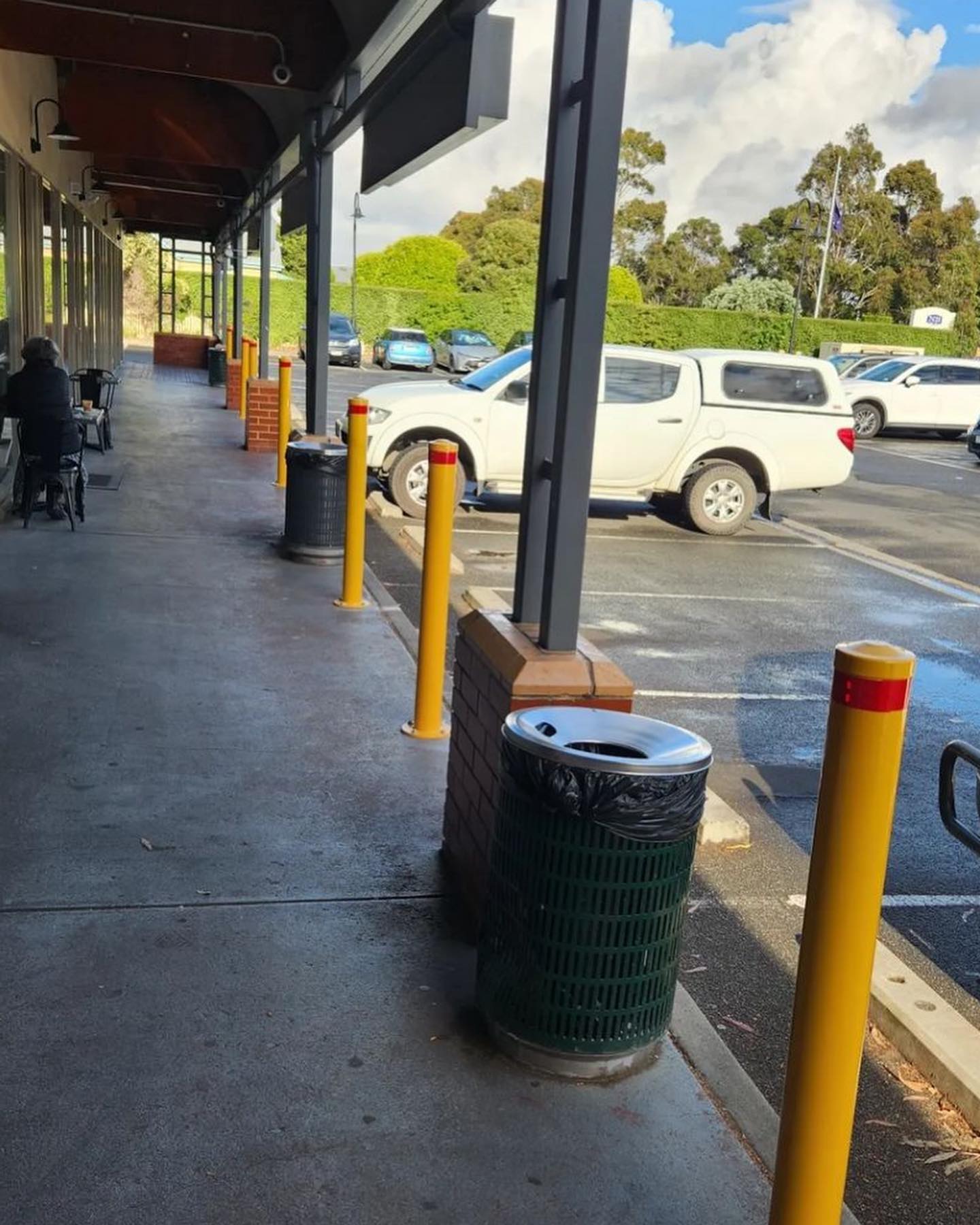
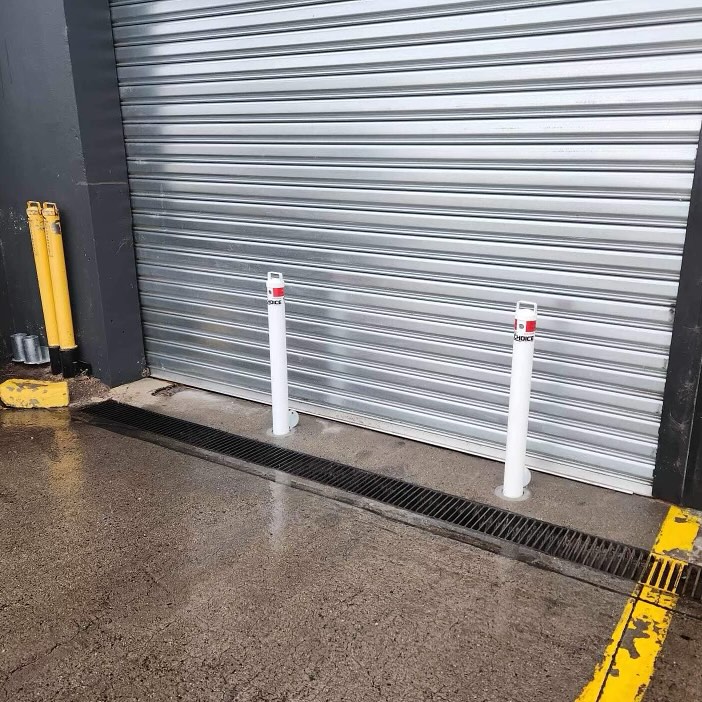
Access control bollards manage where vehicles can and cannot go. They are not designed to absorb heavy impact. Their job is to create a physical boundary that can be adjusted as the site requires. A bollard that drops flat for a morning delivery and stands upright by lunchtime is doing access control work. So is a removable post that reserves a parking bay for a specific tenant.
The common thread across access control applications is flexibility. The bollard needs to allow authorised movement while preventing unauthorised movement, and it needs to do this without turning every access change into a construction job.
Commercial environments where access control bollards are most frequently installed include:
In each of these settings, the bollard is a gate, not a wall. It exists to be opened and closed, raised and lowered, removed and replaced. That operational rhythm is what separates access control from asset protection.
Three product formats cover the vast majority of access control applications on commercial sites. Each trades off convenience against security, and the right choice depends on how often the bollard needs to move and who needs to move it.
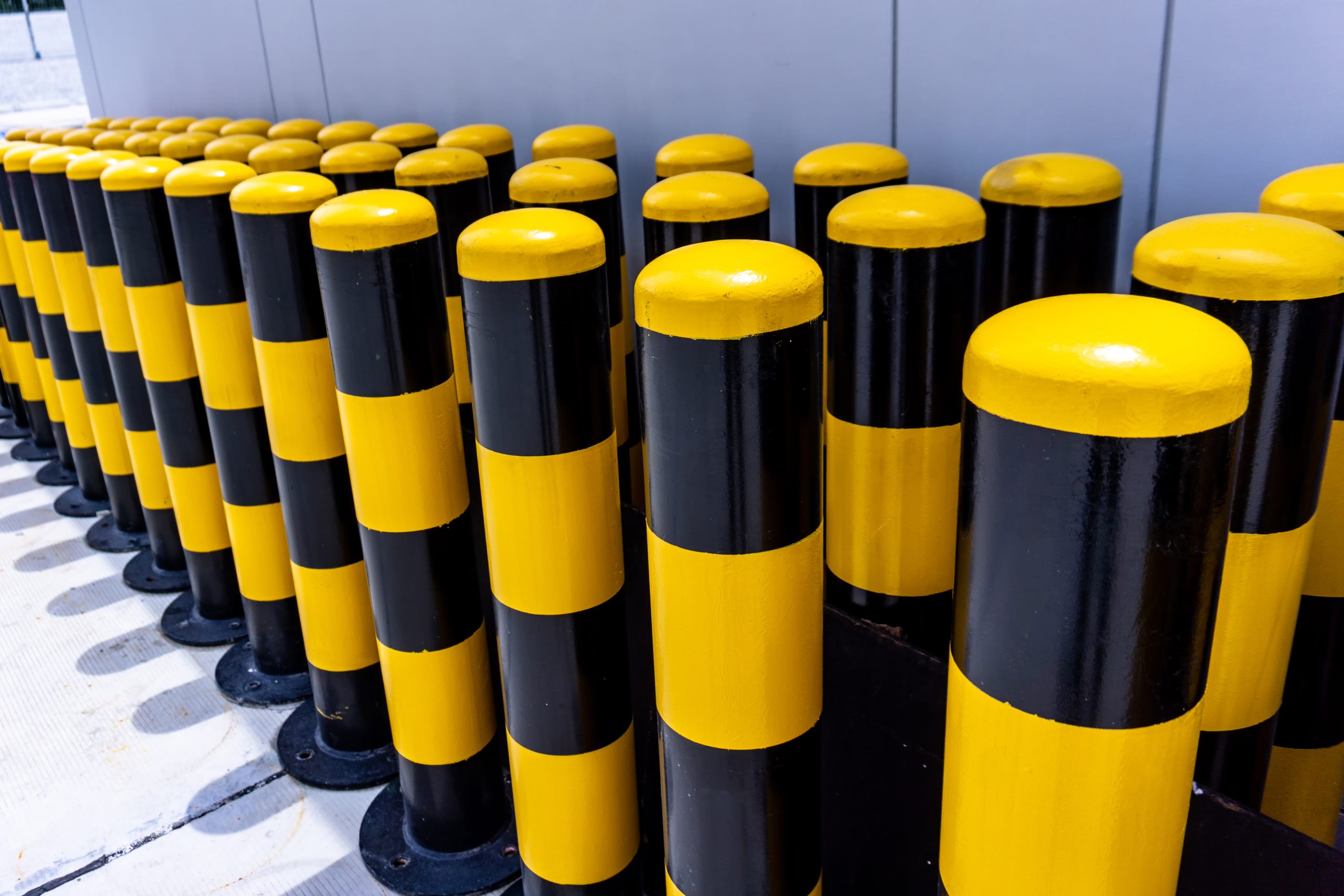
Asset protection bollards absorb impact. They sit between a vehicle and something that would be expensive to repair or dangerous to damage, and they stay there permanently. Nobody needs to move them. Nobody should want to.
The job is straightforward: stop a vehicle before it reaches the asset. That means the bollard must be strong enough to take a hit without failing, and positioned close enough to the asset to prevent contact but far enough from the vehicle path to avoid unnecessary strikes.
Assets that most commonly need bollard protection on commercial properties include:
Fixed heavy-duty steel bollards are the standard product for asset protection. In-ground installation with a concrete footing is preferred where the slab depth allows, because a bollard anchored into the ground absorbs more force than a surface-mounted alternative. Surface-mount base plates suit sites where underground services or thin slabs prevent core-drilling.
The simplest way to determine whether a bollard application is access control or asset protection is to ask one question: does this bollard ever need to move?
If the answer is yes, the application is access control. The bollard needs to accommodate authorised vehicle movement at certain times while restricting it at others. Product selection should prioritise ease of operation, durability through repeated use cycles, and a locking mechanism that matches the site's security needs.
If the answer is no, the application is asset protection. The bollard sits in one position for its entire service life. Product selection should prioritise impact resistance, mounting strength, and proximity to the asset being protected. It does not need a lock, a hinge, or a removable sleeve. It needs to be heavy, fixed, and in the right spot.
Most commercial properties need access control and asset protection working together. The two functions serve different parts of the same site, and treating them as separate decisions leads to better outcomes than trying to find one product that does everything.
A typical example is a commercial property in an inner Melbourne suburb with a shared rear service lane. The lane entrance needs a removable or fold-down bollard to control after-hours vehicle access. Inside the lane, the gas meter on the back wall needs a pair of fixed bollards to prevent reversing trucks from hitting it. Same property, same lane, two different bollard functions, two different products.
Common combinations across commercial sites:
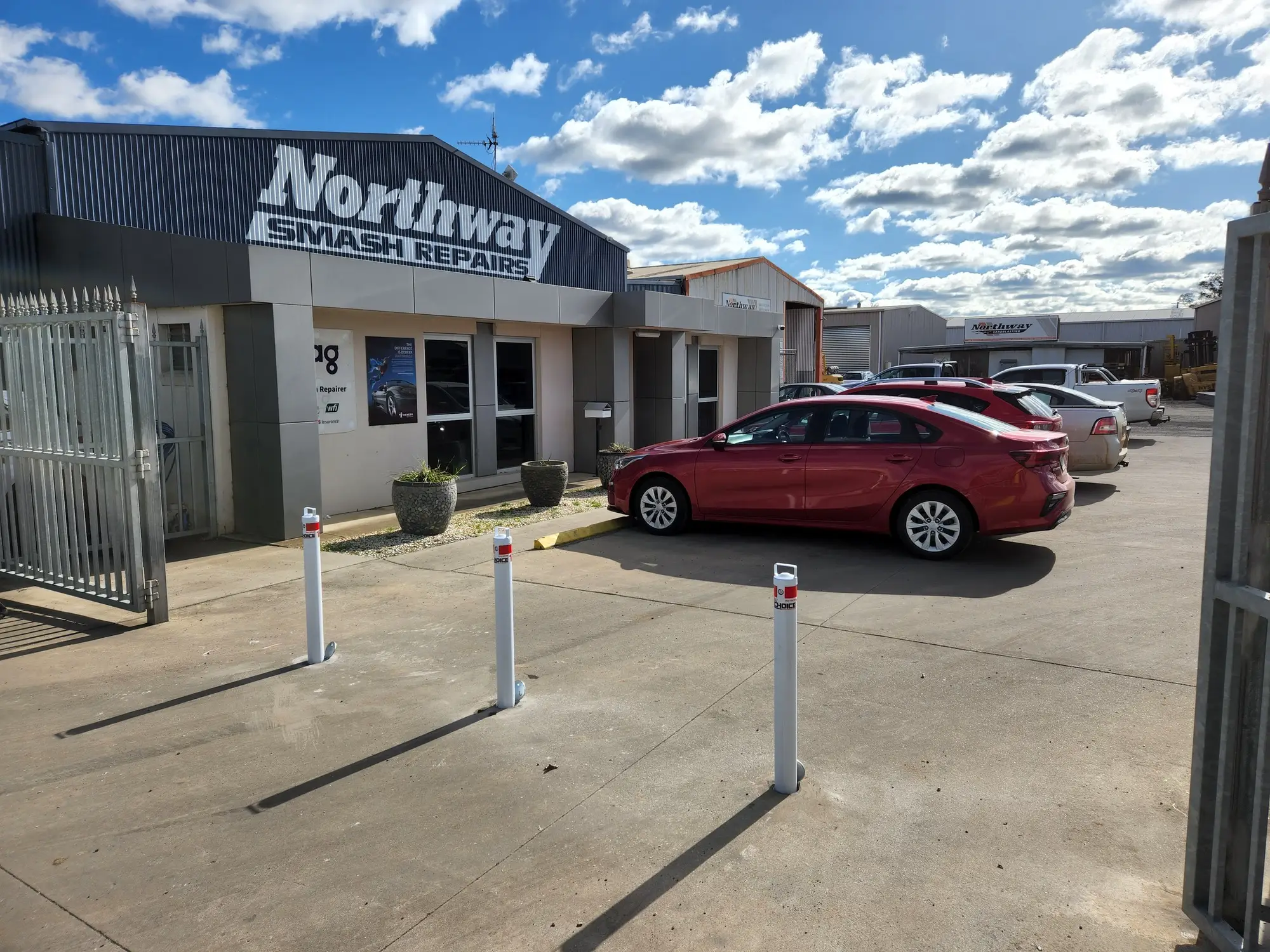

Bollard selection does not need to be complicated. Standard off-the-shelf products cover the vast majority of commercial applications. The decision framework is a short series of practical questions that match the product to its function.
The most common bollard selection mistake on commercial sites is choosing the product before defining the function. A fold-down bollard installed where a fixed post was needed will take an impact it was never designed for. A fixed bollard installed where access needs to change will end up cut out of the ground within six months.
Starting with function, whether the job is access control, asset protection, or both, narrows the product range to the options that will work. From there, a short site assessment confirms the mounting method, spacing, and any compliance considerations. That sequence keeps bollard selection simple, and it keeps the installation working long after the installer has left.
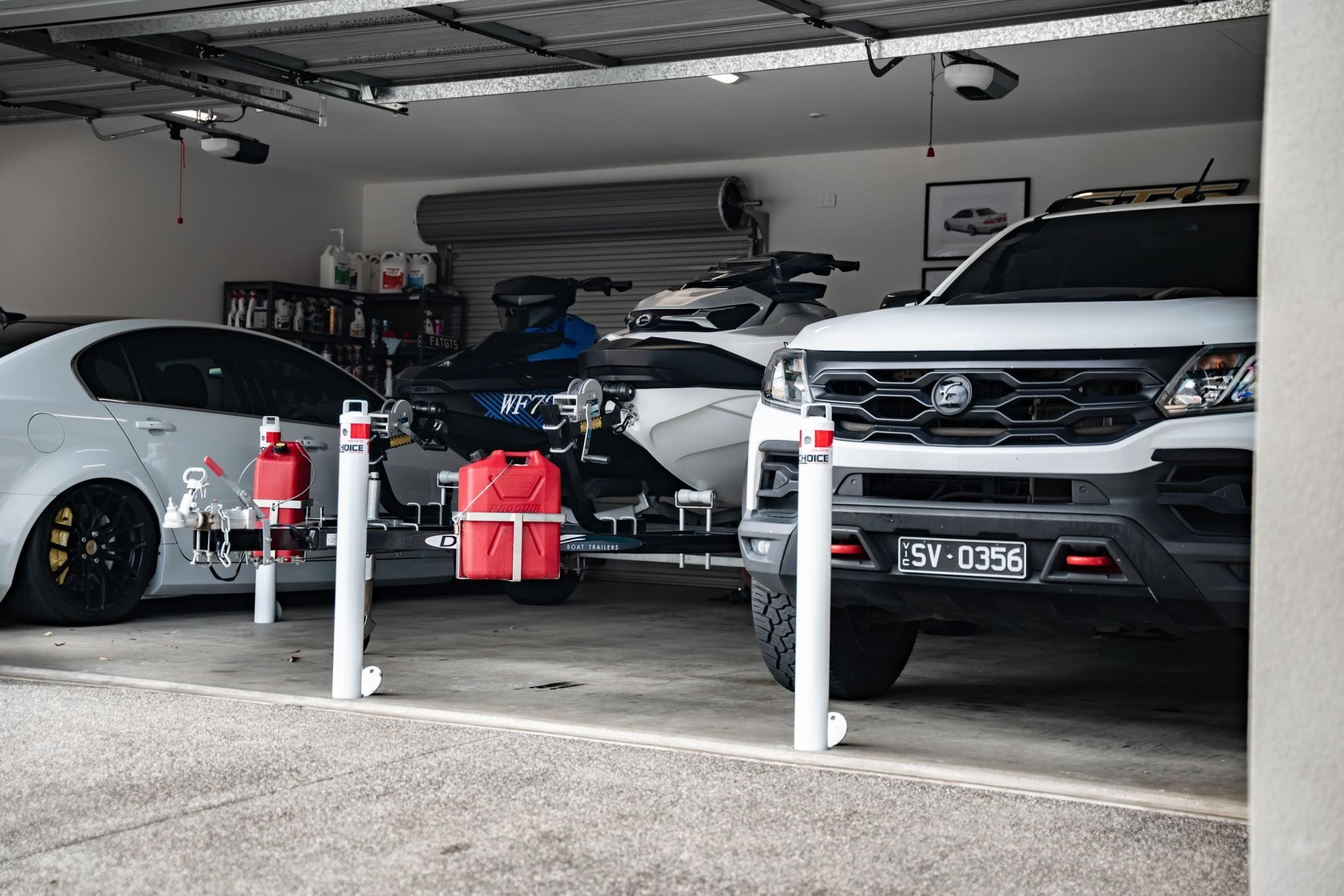
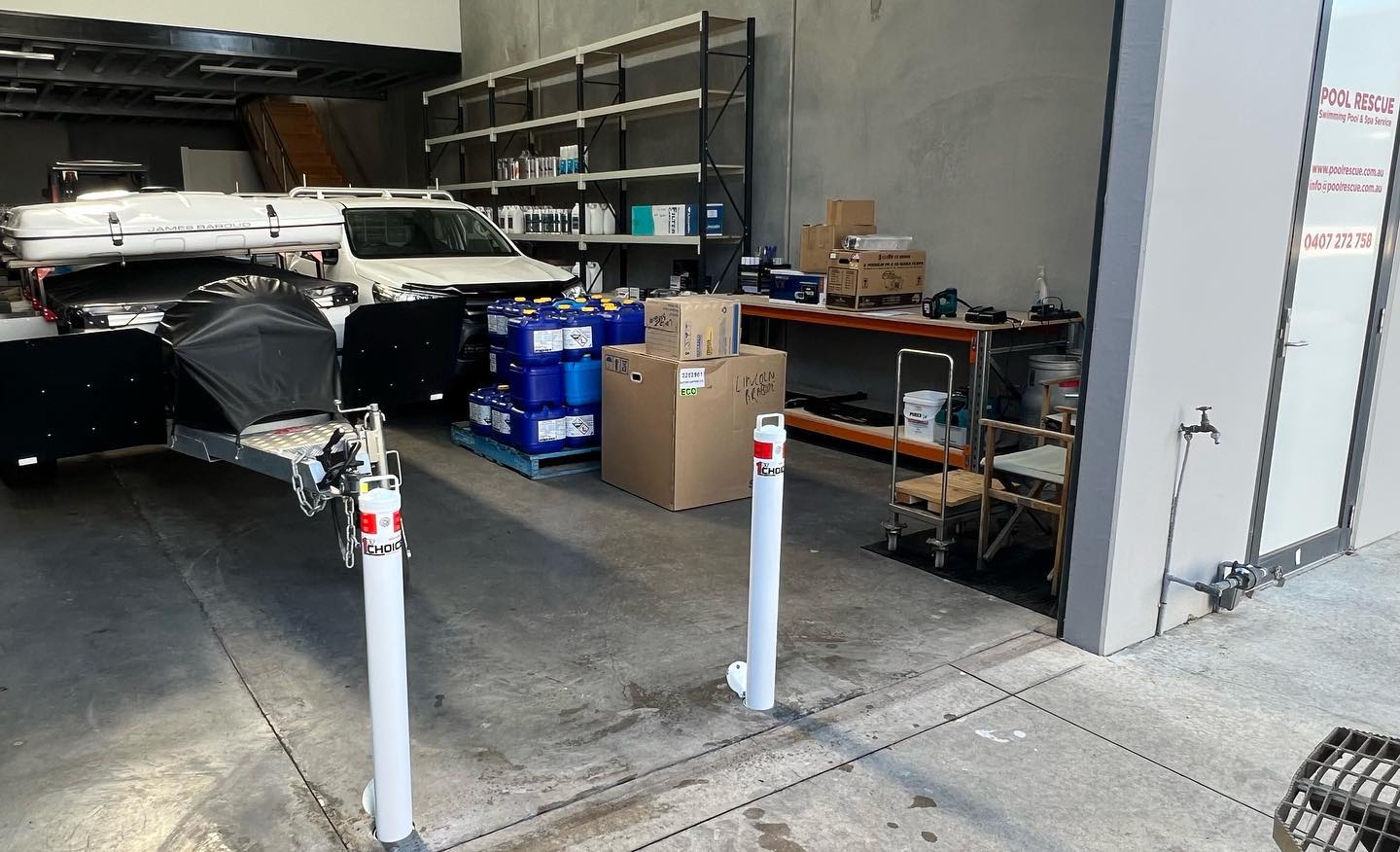
Access control bollards manage where vehicles can and cannot go. They are designed to be moved, removed, or lowered to allow authorised access. Asset protection bollards are fixed in place permanently to prevent vehicles from damaging infrastructure, equipment, or buildings.
Fold-down bollards with padlock provision are the most common choice for access control on commercial sites. Removable bollards suit locations that need a completely clear opening, while retractable or automatic bollards suit high-traffic entry points.
These are different functions that typically require different products. Access control bollards need to move; asset protection bollards need to stay fixed and absorb impact. Most commercial sites use a combination of both types across different areas of the property.
Asset protection bollards should be installed between vehicle movement paths and fixed assets such as electrical switchboards, roller doors, building corners, structural columns, racking uprights, gas meters, and mechanical plant. Placement should follow the site's damage history and traffic patterns.