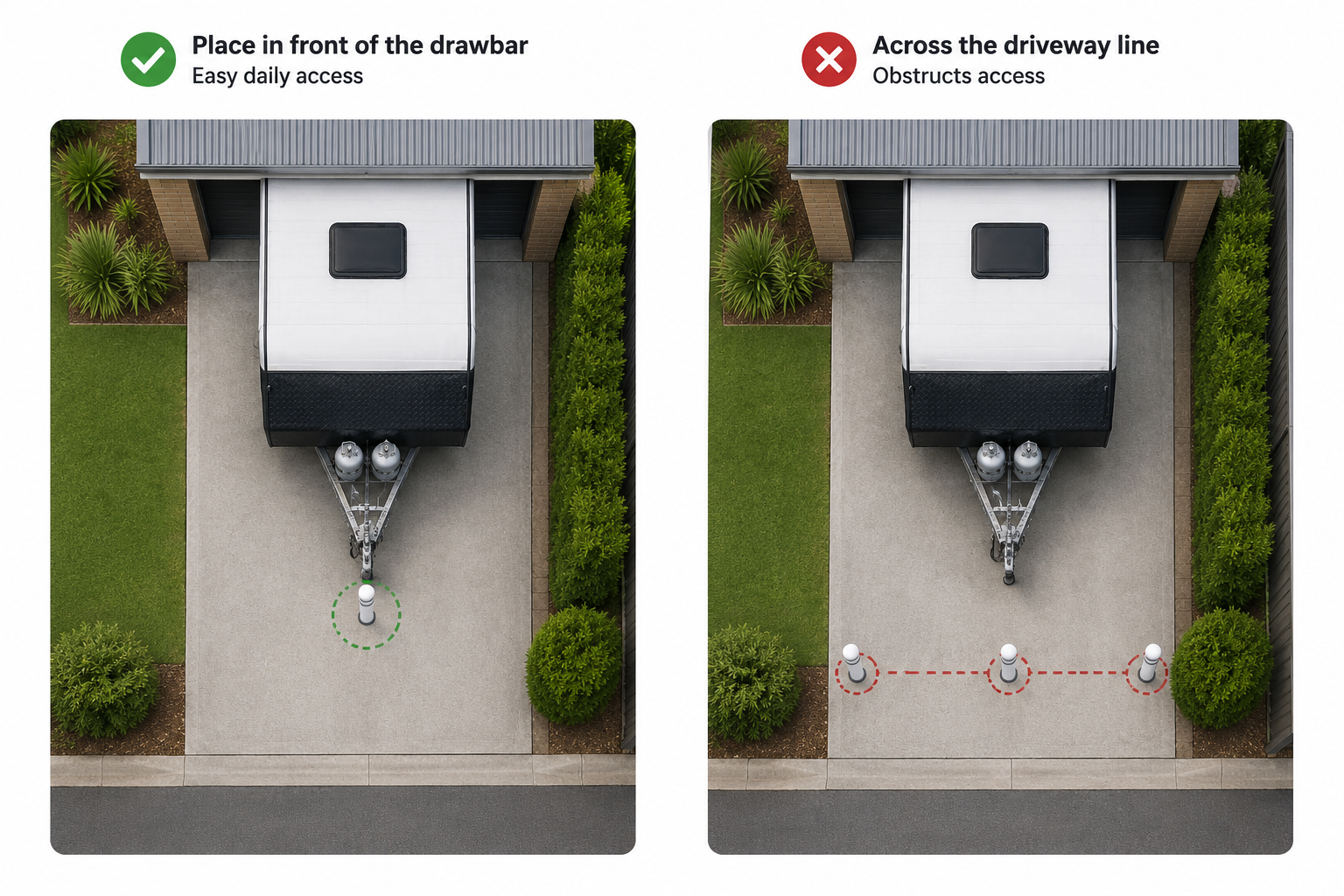
A tow-away theft needs a clear path from the coupling to the road. Block that path and the theft stops. Driveway bollards do this in one of two ways. A post in front of the coupling stops the drawbar moving forward. A post across the driveway stops the whole rig getting past.
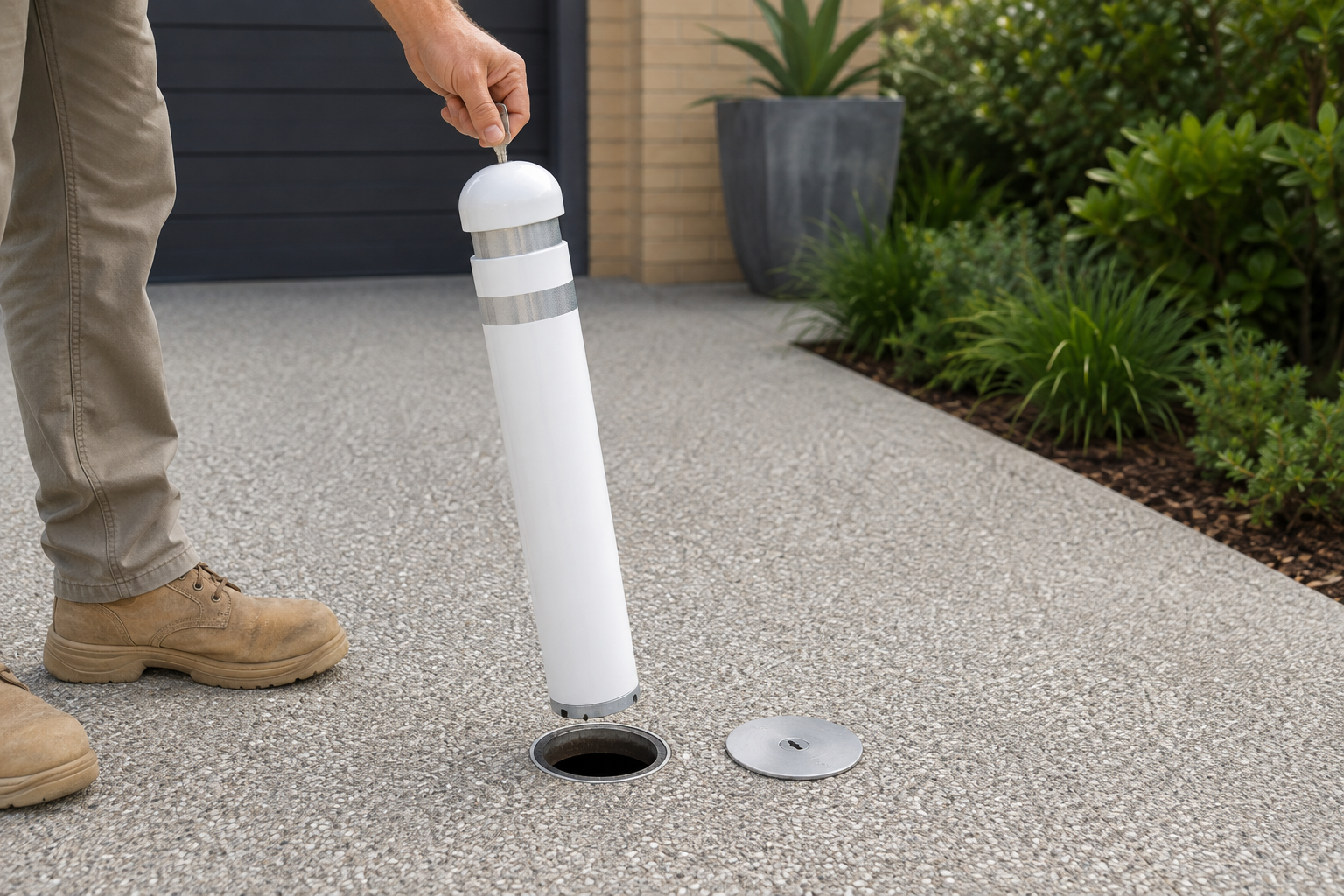
Where the caravan lives in one spot, a permanent bollard is set in concrete and stays put. A surface-mount version bolts onto an existing slab. Where you still tow the van out yourself, a removable bollard is the better choice. It drops into a socket cored into the driveway and lifts out with a key.
A keyed removable bollard locks into its ground socket and only lifts out with the matching key. When the post is out, a flush cover plate sits over the socket, level with the driveway. You can drive over it, and there is nothing left sticking up to catch a tyre or a foot.
A 5mm steel post set in concrete is not something a vehicle drags aside. That is the difference between a bollard and a warning sign. The post has to be physically defeated, and that takes time, tools and noise most thieves will not risk on a suburban street.
This is where a bollard beats a hitch lock on its own. A coupling is held to the trailer by four bolts. An organised thief can unbolt it, fit their own coupling and tow the rig away, even past a locked hitch. A post in the ground does not care about the coupling. The rig still cannot get past it.
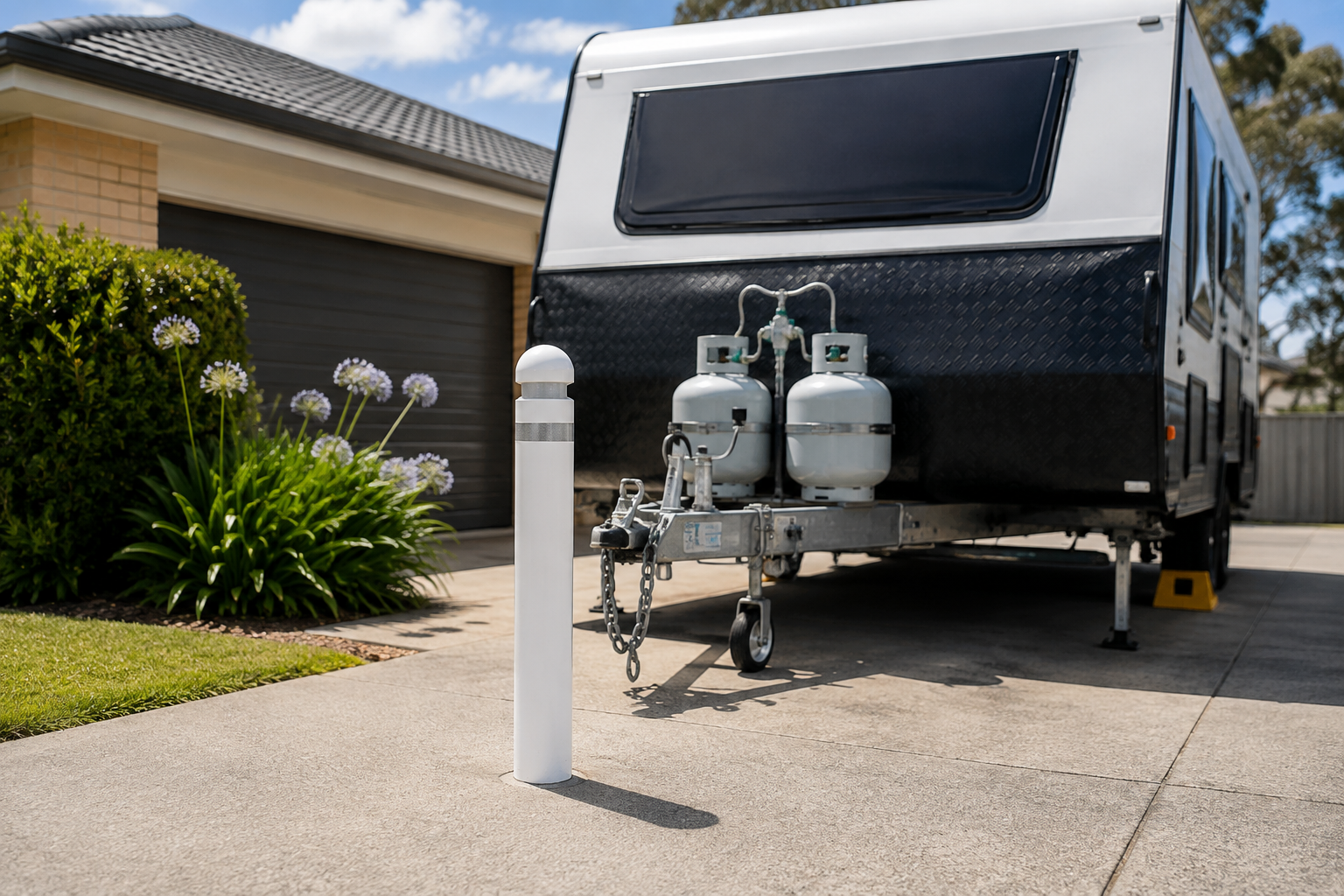
What you are protecting decides where the post goes and whether it should lift out. A caravan or boat on a trailer is towed from the front, so a bollard works best in front of the drawbar. A car in the driveway is better covered by a post on the open side, where a reversing vehicle or a thief would come from.
Most home driveways suit a 90mm post, finished in white with a red reflective band so you can see it when you reverse at night. The same thinking covers garage bollards. A post beside the roller door stops a car rolling into it, or a trailer clipping the frame.
A boat on a trailer is light at the front and quick to lift and shift by hand, so blocking the drawbar path matters as much as locking the coupling. A box or car trailer loaded with tools is a grab-and-go target, and it is small enough to move fast. In both cases a removable post in front of the coupling lets you hook up on the weekend and closes the gap the rest of the week.
| What you're protecting | Where the bollard goes | Removable or permanent |
|---|---|---|
| Caravan or boat on a trailer | In front of the drawbar, or across the driveway line | Removable if you tow out often, permanent if it stays put |
| Box or car trailer | In front of the coupling | Removable, so you can still hook up when you need to |
| Car or ute in the driveway | On the open side of the parking spot | Permanent, unless you share the drive |
The worry with a fixed post is simple. You still need to get the van out. Placement solves it. Set the socket to one side of the drawbar's path, or use a removable post on the line you cross, so the rig runs straight past once the post is out.
Removable bollards keep daily access easy. Lift the post, tow out, drop it back when you return. On a shared driveway, a removable post lets the other household through without a permanent barrier in the way. Bollards for driveways sit on your side of the property line, clear of the footpath.
The protection matters most when you are away. That is exactly when a caravan or boat sits untouched on the drive for days, which is what a thief watches for. A removable post earns its keep here. Down while you are home and moving the van, up and locked the moment you head to work or leave on a trip.
Where a wider driveway needs closing, two posts are spaced so a vehicle cannot slip between them while a person can still walk through. A concrete driveway takes a cored socket or a surface mount cleanly. Asphalt is softer, so the fixing method changes. That is another reason to check the surface before anything is cored or set.
A bollard is a solid physical block, and a good one. It is not a complete guarantee. A determined thief with time and power tools can work around most single measures. The aim is to make your rig the hard target so they move on to an easier one down the street.
Layer the bollard with a couple of cheap extras. A hitch lock blocks the coupling so it cannot drop onto a tow ball. For a caravan or boat, a wheel clamp stops the wheels rolling. One trap many owners miss: loose safety chains can be looped over a tow ball and used to drag the rig away even when the coupling is locked. Pull the chains back and secure them.
Where you can, park the drawbar toward a wall or fence so there is no room to hitch up in the first place. Good lighting and a GPS tracker do the rest. Together these turn a quick, quiet theft into a slow, noisy one, which is exactly what sends a thief looking elsewhere.
The right bollard blocks a tow-away and still lets you move the van when you want to. That balance depends on your driveway: its width, whether it is concrete or asphalt, and how often you take the van out.
Book a driveway assessment with First Choice and we will mark where the post should sit for your rig, and whether it should be permanent or lift out. Worth booking before the next long weekend, when driveways sit full and everyone on the street knows exactly what is parked where.