The problem is location. Chargers and batteries go where the power supply and the parking meet, which is usually a garage, carport or driveway. That is the same square metre a car noses into every day.
At home, a few setups carry more risk than others:
On commercial sites the same logic scales up, with more vehicles and less care. Workplace car parks, shopping centre bays, apartment basements and public fast-charging sites all put expensive chargers beside moving traffic. Much of that traffic is drivers in a hurry, or people who do not know the site. One reversing delivery van, or a single misjudged park, can take a charger offline and leave a queue of drivers with nowhere to plug in.
The repair bill is rarely just the hardware. A damaged charger can mean weeks off-line while a replacement is ordered and an electrician is booked.
For a business running paid charging, that downtime is lost revenue on top of the repair. A protective bollard costs far less than replacing the unit and covering the weeks around it.
A charger is a sealed electronic unit. A cracked casing or a bent internal mount usually means a full replacement rather than a repair, and the same goes for a battery whose enclosure has been breached. That is why guarding the unit up front tends to work out cheaper than dealing with one after a hit.
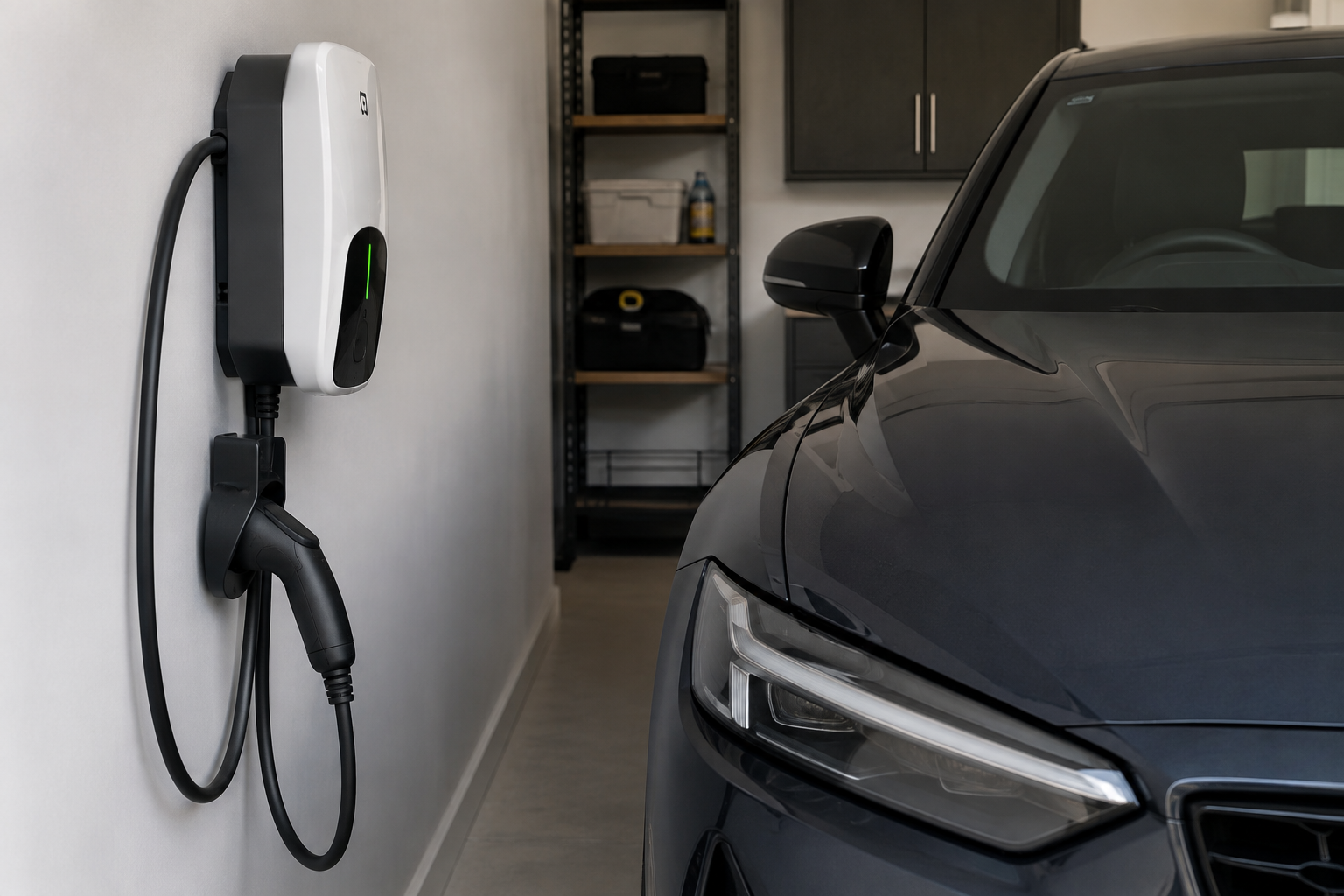
For home batteries, the short answer is that protection is required. AS/NZS 5139 is the Australian and New Zealand standard for installing battery energy storage systems, which is the formal name for a home battery. It calls for the battery to be protected from mechanical damage where there is a risk of vehicle impact, such as in a garage, carport or driveway.
The standard sets the outcome and leaves the exact product open. It does not name bollards or say you must use one. It asks for the battery to be shielded from impact, and a fixed steel bollard is one widely accepted way to do that. A shelf, a cupboard or the garage wall on its own is generally not treated as adequate protection, because none of them will stop a car.
EV chargers sit under a different set of rules. The electrical side of a charger install is covered by the wiring rules (AS/NZS 3000) and is the job of a licensed electrician, so that part sits outside what a bollard maker does. No single clause says every charger must have a bollard. The physical logic still holds: if a car can reach the charger, impact protection is sensible, and many installers now fit it as standard where vehicles move close by.
On a shared site the responsibility question comes up fast. In a workplace car park, an apartment basement or a retail tenancy, whoever installed and runs the charger is usually the one expected to keep it safe and working. Guarding it against a foreseeable knock is a simple part of that, and much cheaper than the fallout from a preventable one.
Good protection guards the whole unit. A single bollard planted in front of a wide charger leaves the leading and trailing edges open, which is where a car turning in tends to make contact. The aim is to block the paths a vehicle can take toward the equipment, not just the middle of it.
A few principles hold across most sites:
Foundation depth, spacing and how far forward the bollard sits all depend on the site. These are set at the assessment stage rather than by a single fixed figure, because a home garage and a public car park pull in different directions.
Here is a rough starting point for matching the setup to the job.
| Setup | Typical Bollard Type | Placement Focus |
|---|---|---|
| Home EV charger (garage or carport) | Fixed or removable steel bollard | One or two guarding the wall unit, kept clear of the charging lead |
| Home battery (energy storage system) | Fixed steel bollard | Full-width cover, meeting the mechanical-protection requirement |
| Workplace charging bay | Fixed steel bollard | Front and side cover against reversing cars and vans |
| Public or fast-charging site | Heavy fixed steel bollard | Protection around a higher-traffic, higher-value unit |
Bollards guard the equipment. They do not decide who parks in the bay. That distinction matters, because two different problems get mixed up.
The first problem is impact protection: stopping a vehicle from hitting the charger or battery. That is the job fixed and removable steel bollards do, and it is what this article covers.
The second problem is a petrol or diesel car parking in an EV bay and blocking it. The industry calls this ‘ICEing’. Solving it needs a bollard that drops out of the way for the right driver and rises to block everyone else, usually run by an app or a remote. That is an automatic rising bollard, a separate product with its own electronics and battery. First Choice does not make or install automatic or app-controlled bollards, so if bay-access enforcement is the goal, that is a different product line to look at.
Being clear on this saves money. A fixed steel bollard is the right call for protecting the gear. It is the wrong tool for policing the bay.
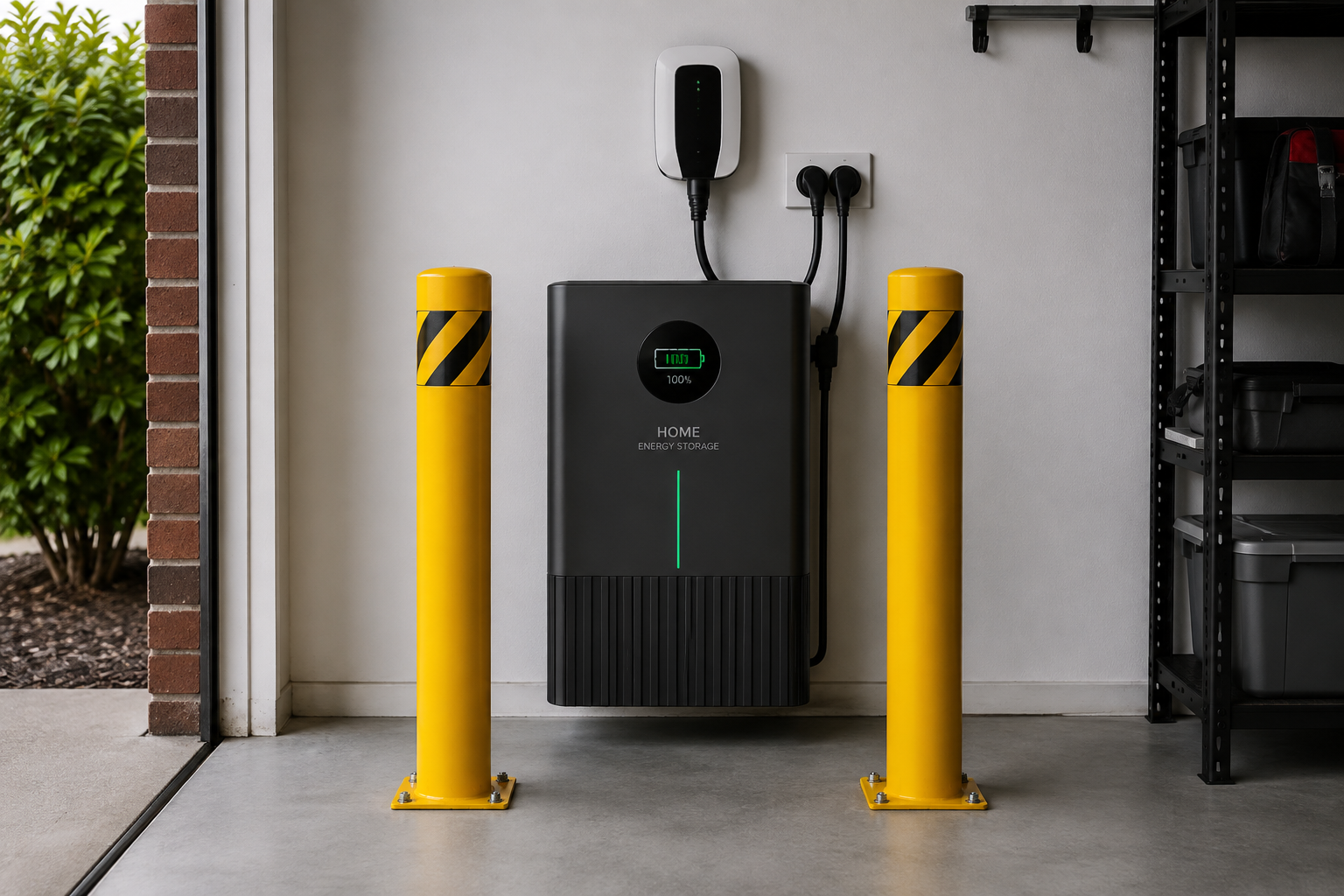
The quickest way to get the layout right is to start from your own site rather than a generic diagram. The position of the charger, the angle cars come in at, and whether you need servicing access all change the answer.
Send a photo of where your charger or battery sits, along with rough measurements of the space. From that, First Choice can suggest a bollard arrangement that guards the unit and, for a home battery, meets the mechanical-protection requirement under AS/NZS 5139. If access for servicing is a concern, that is the point to ask about removable posts.
Getting protection in at install time is cheaper and cleaner than retrofitting after a knock, and it means the compliance box is ticked from day one. If your charger or battery is going in soon, sort the bollards before the concrete is cut and the car is back in the garage.