A U-shaped bollard is a length of steel tube bent into a U shape, fixed to the floor at both legs, forming one continuous barrier in front of a piece of equipment. It is also called a hoop bollard or a machine guard.
A single post stops a vehicle on one line. Anything approaching from a few degrees either side can still reach past it. A hoop covers the face and both front corners in one piece, which matters because forklift damage rarely arrives straight on.
Watch a forklift work an aisle and the pattern shows itself. The mast swings through an arc on every turn. The tines sit forward of the operator and below their line of sight when a pallet is up. Reversing out of a bay puts the counterweight, the heaviest part of the machine, through a curve. The corner of the equipment is what sits in that curve.
Two posts spaced correctly can do a similar job. A hoop has one thing a pair of posts does not: the top rail. It stops a raised tine passing over the guard and into the equipment behind it.
The dents are almost never in the middle of the face. They are on the corner, because that is where the machine was turning.
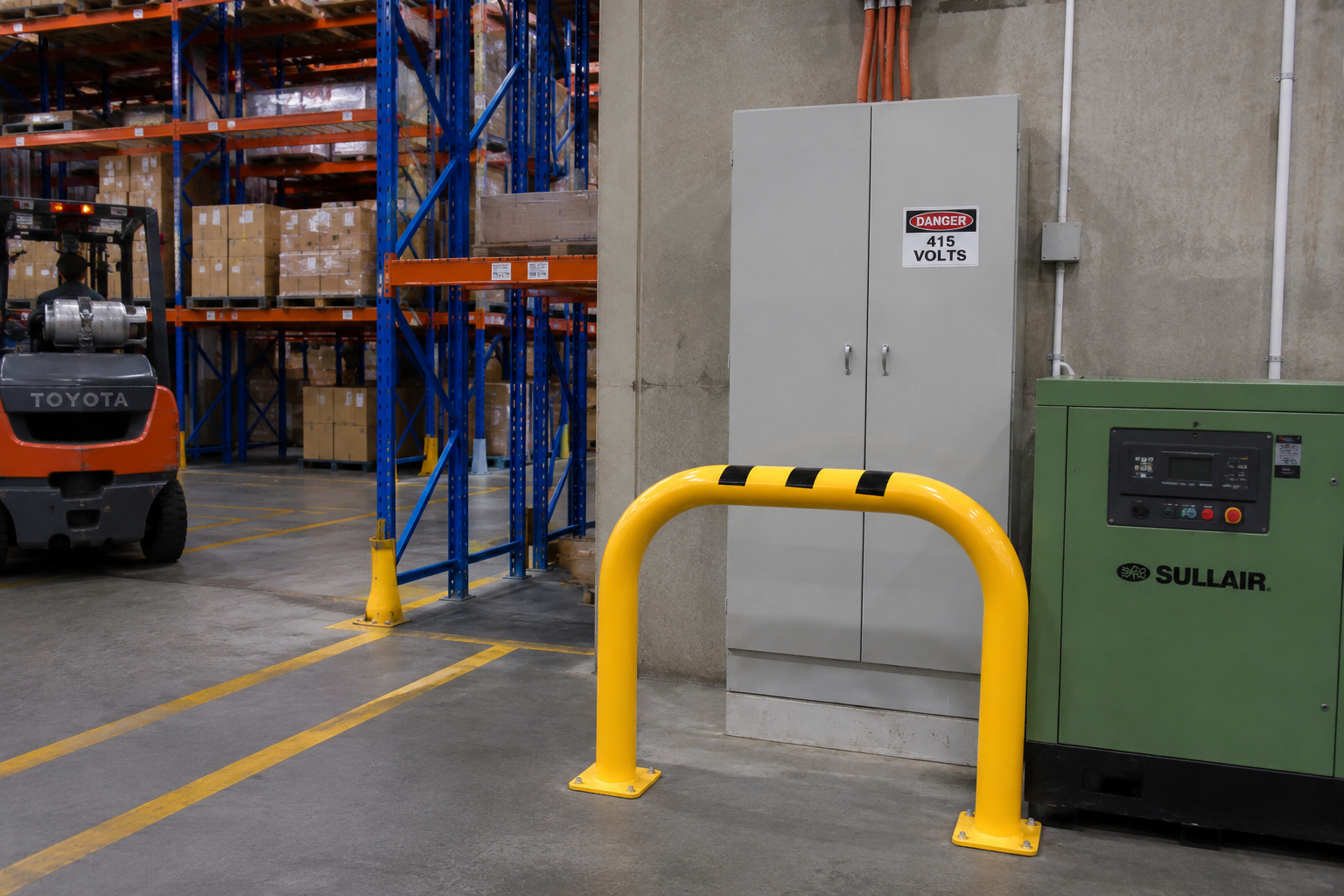
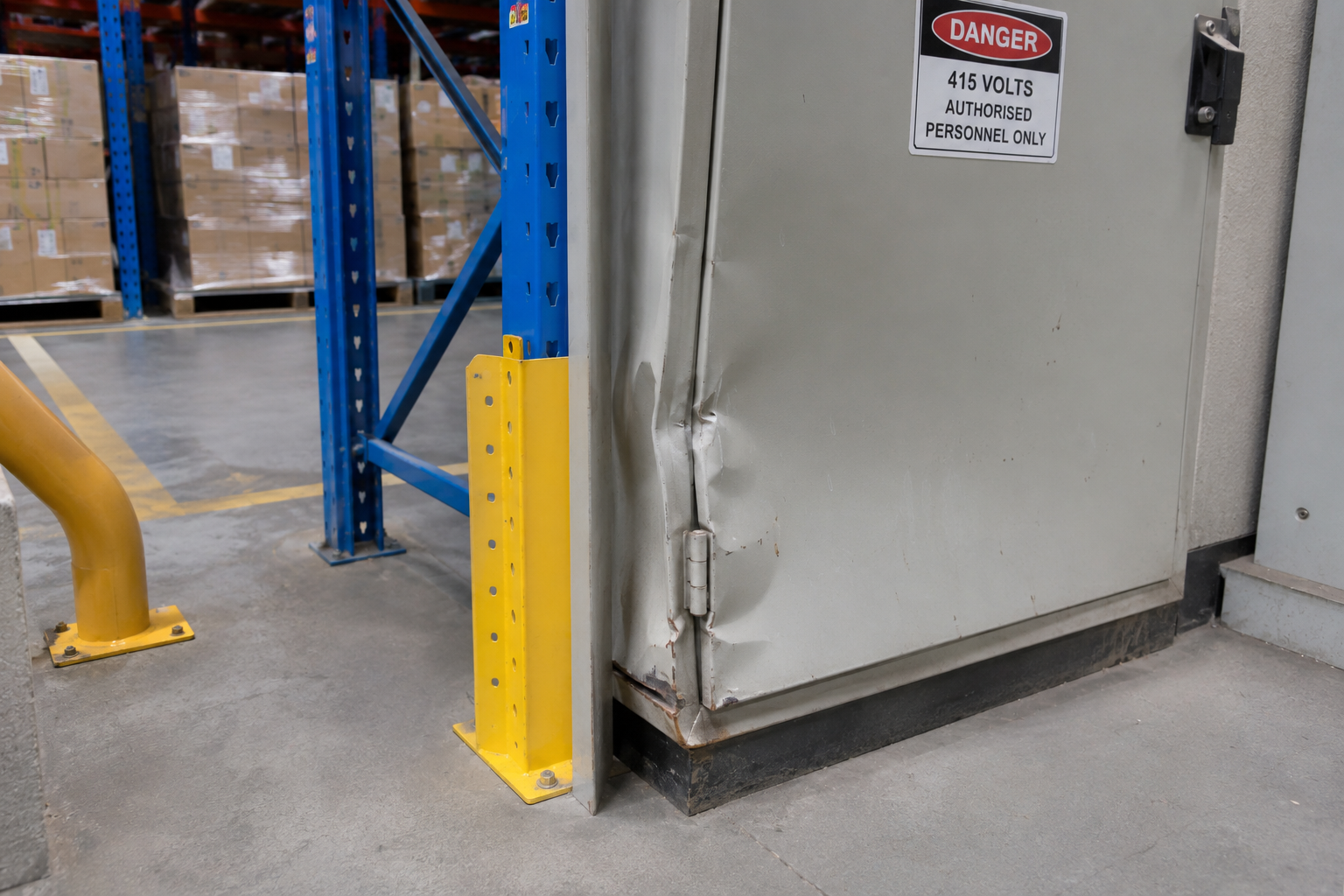
The equipment worth guarding is whatever costs you production time when it stops, sits inside a forklift’s working radius, and cannot be moved somewhere safer. That usually comes down to six things. These are the types of applications where bollards for operational damage can prevent a relatively small impact from becoming a costly interruption.
Placement decides whether a hoop works. A well-specified hoop set too close to the equipment still lets the impact through, because steel bends before it fails and the equipment is sitting inside the bend. For more detail on commercial bollard placement, the same principle applies across different warehouse and industrial applications.
This is how the common cases usually fall.
| What You Are Protecting | Hoop or Single Posts | Fixing Method |
|---|---|---|
| Pallet racking end frame | Hoop across the aisle-facing end | Surface mount, so it moves when the racking moves |
| Switchboard or distribution board | Hoop, set outside the electrical working clearance | In-ground where the slab allows |
| Gas bottle cage or LPG store | Hoop, or a run of fixed posts | In-ground |
| Compressor or fixed machinery | Hoop on the exposed approach sides | Depends on the slab and the aisle layout |
| Roller door track | One post each side of the opening | In-ground |
A hoop bollard is built for low-speed impact from vehicles working on your site. It is not a crash-rated barrier and it will not stop a vehicle at road speed. Crash-rated products are tested against defined vehicle weights and impact speeds, and a standard steel hoop is not one of them.
It also does not fix a layout problem. WorkSafe Victoria states that forklifts cause more workplace deaths and injuries than any other piece of equipment, and that more than half of forklift-related fatalities have involved pedestrians. The control that addresses that is a traffic management plan separating forklifts from people on foot, which sits under the Occupational Health and Safety Regulations 2017.
A hoop protects the switchboard. It does not protect the person standing beside it.
If forklifts and pedestrians are sharing the same aisle, the aisle is the problem and the guard is only the last line of defence. And a guard that has already been hit needs assessing before you rely on it again, because steel that has bent once has used up part of its capacity. If a bollard has already taken an impact, see what to do after a bollard is hit before putting it back into service.
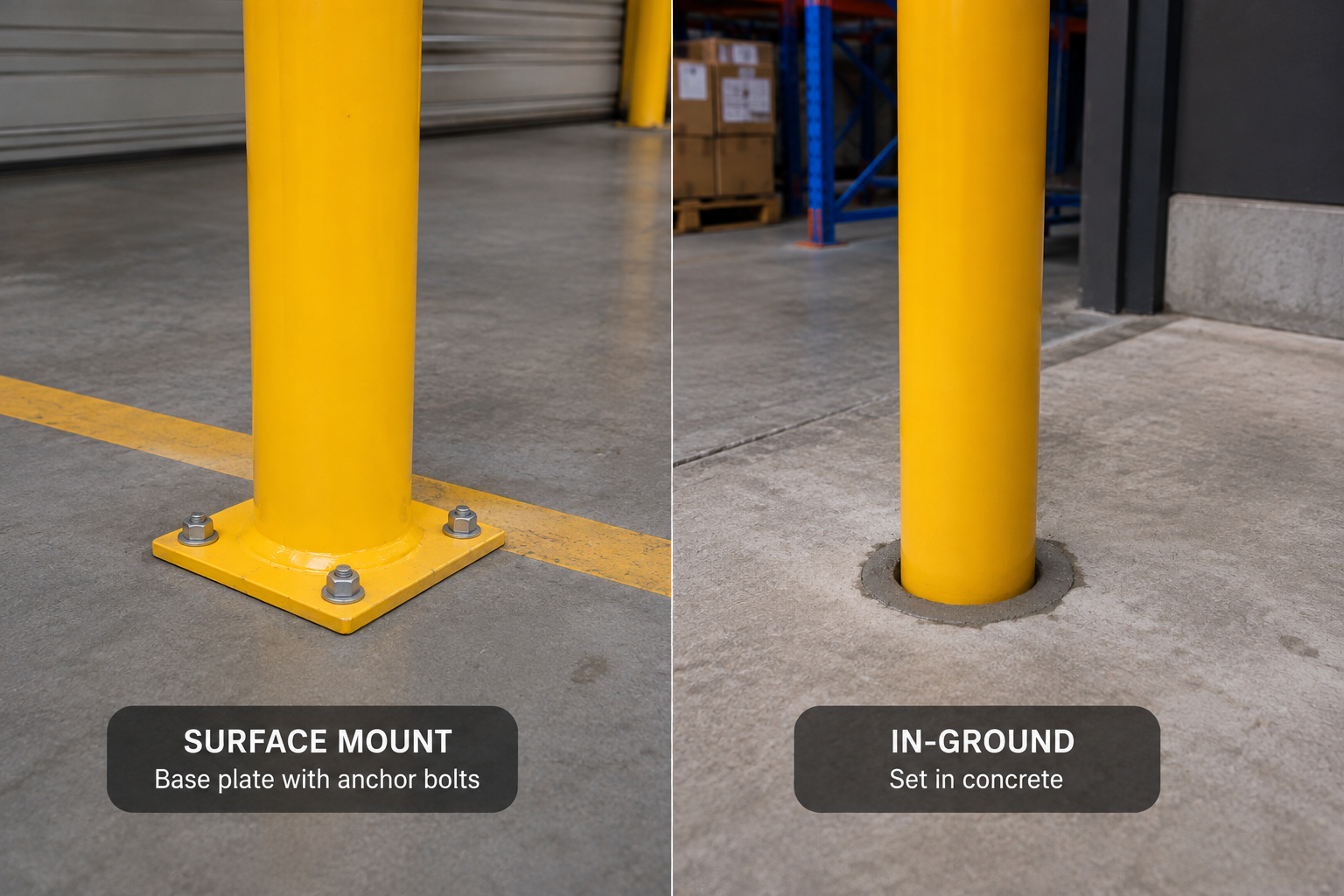
Installation is quicker and cheaper when nothing has to be moved to make room for it. A racking reconfiguration, a shutdown, a stocktake, or a bay that has already been emptied for repair all give an installer the access they need without stopping work a second time.
There is also a document that makes most of the placement decision for you. AS 4084.2:2023 requires a formal racking inspection by a competent person at least once a year, and the report classifies damage by location. Pull your last two reports and look for the amber entries that repeat in the same bays. Those are the positions that keep getting clipped, and that repetition maps where guards belong more precisely than any walk-through will.
A hoop guard is a made-to-order item. It gets built to the footprint of the equipment sitting behind it, which is why the measurements matter more than the product name on a quote. First Choice Bollards manufacture custom bollards to order, so send through a site plan or a few photos showing the gear and the forklift routes around it, and you can get sizing and placement advice against your real layout.