A parking bollard is a steel post fixed into the ground that stops a car parking in the space. For a reserved bay, the useful kind is one the authorised driver can move by hand. There are two main options for a single bay.
For most reserved bays, the keyed removable type does the job. It hands one person control of the space without a gate, an attendant, or an app. The bay stays closed by default and only opens for the key holder.
Some sites try a cone or a chain first. A cone is easy to move, so a determined driver just shifts it aside. A chain sags low enough to miss. A locking bollard is harder to ignore, which is why sites tend to settle on it.
A bollard also has to be seen, or someone reversing will clip it. First Choice powder coats them white with a red reflective band as standard, so the post stands out in a dim car park at night. For a single car bay, a 90mm diameter post is the common size. A 114mm post is used where the bay sees heavier vehicles or more passing traffic.
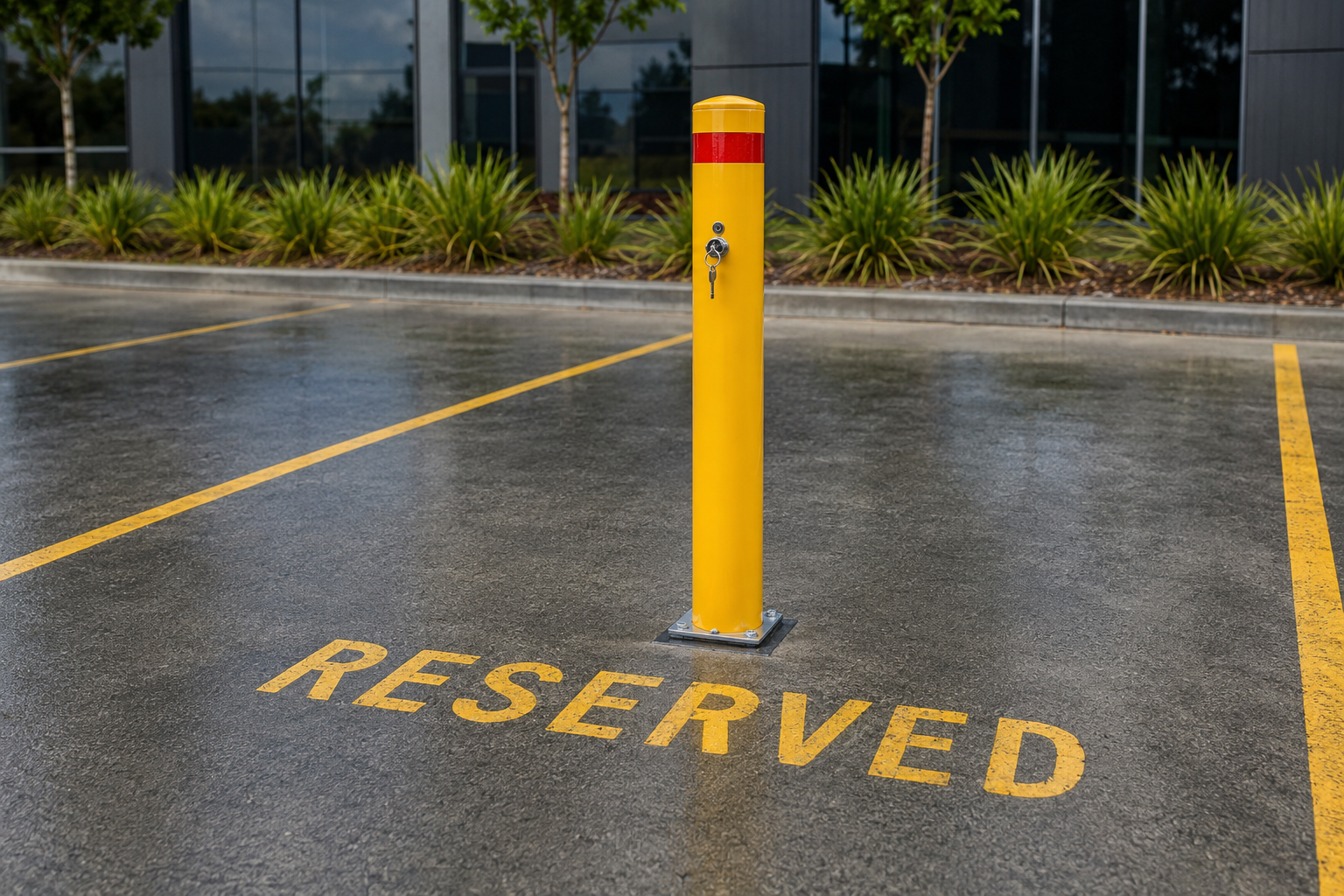
Any bay that has to stay free for a set person or purpose is a candidate. The problem is always the same. The space is valuable to someone, and a sign on its own will not hold it. This is where private parking bollards earn their place, holding one bay for one owner on a site everyone else can use. These are the bays that come up most on commercial and shared sites.
The four bays below suit different bollard types.
| Bay Type | Who It's For | Suggested Bollard |
|---|---|---|
| Staff or visitor bay | One named person or a small known group | Keyed removable |
| Loading bay | Delivery drivers, kept clear on a schedule | Keyed removable, or fixed if never parked in |
| Accessible bay (private property) | An employee or resident who needs it | Keyed removable, bay built to AS 2890.6 |
| EV charging bay | Drivers who need the charger | Keyed removable |
One more thing decides how well this works: how predictable the bay's use is. A bay with one regular user and a simple routine is easy to keep clear. A bay shared by a rotating group needs a plan for who holds the key and who resets the bollard, or it drifts back to being open to anyone.
Fitting out a whole car park is a different decision, and our car park bollard guides cover that. If the bay sits in an apartment block or strata property, check who signs off the install first. Our strata bollard guide walks through that.
Getting one bay right comes down to three questions: how often the bay changes hands, what the ground is made of, and who needs a key.
For a bay you fully close, one bollard near the entry line usually does it. For a wider bay, or one where a car might nose in beside the authorised vehicle, two posts spaced across the entry work better. Leave enough room for the authorised car to pull in cleanly once the bollard is down.
A manual bollard controls a bay by hand. Someone lifts or folds it to open the space and resets it to close it. That covers most reserved bays, though it has limits worth knowing.
It will not enforce the bay on its own. If a key holder leaves the bollard down, the space stays open until someone lifts it back up. The system works when the routine is simple and the key holders keep to it.
Keys are the other limit. If a key is lost, the bay is stuck until a replacement or a new lock is sorted, so keep a spare with someone reliable. A shared master key across several bays is convenient, though it also means one lost key affects every bay on that key.
First Choice supplies keyed removable and fixed bollards that people operate by hand. It does not make automatic or app-controlled rising bollards, the kind that sink into the ground at the push of a button. If you need a bay that opens and closes on its own with nobody touching it, that is a different product from a different supplier.
For a single reserved bay, hand-operated is usually enough and far simpler to run. There is no power supply, no control box, and nothing to fail in the rain.
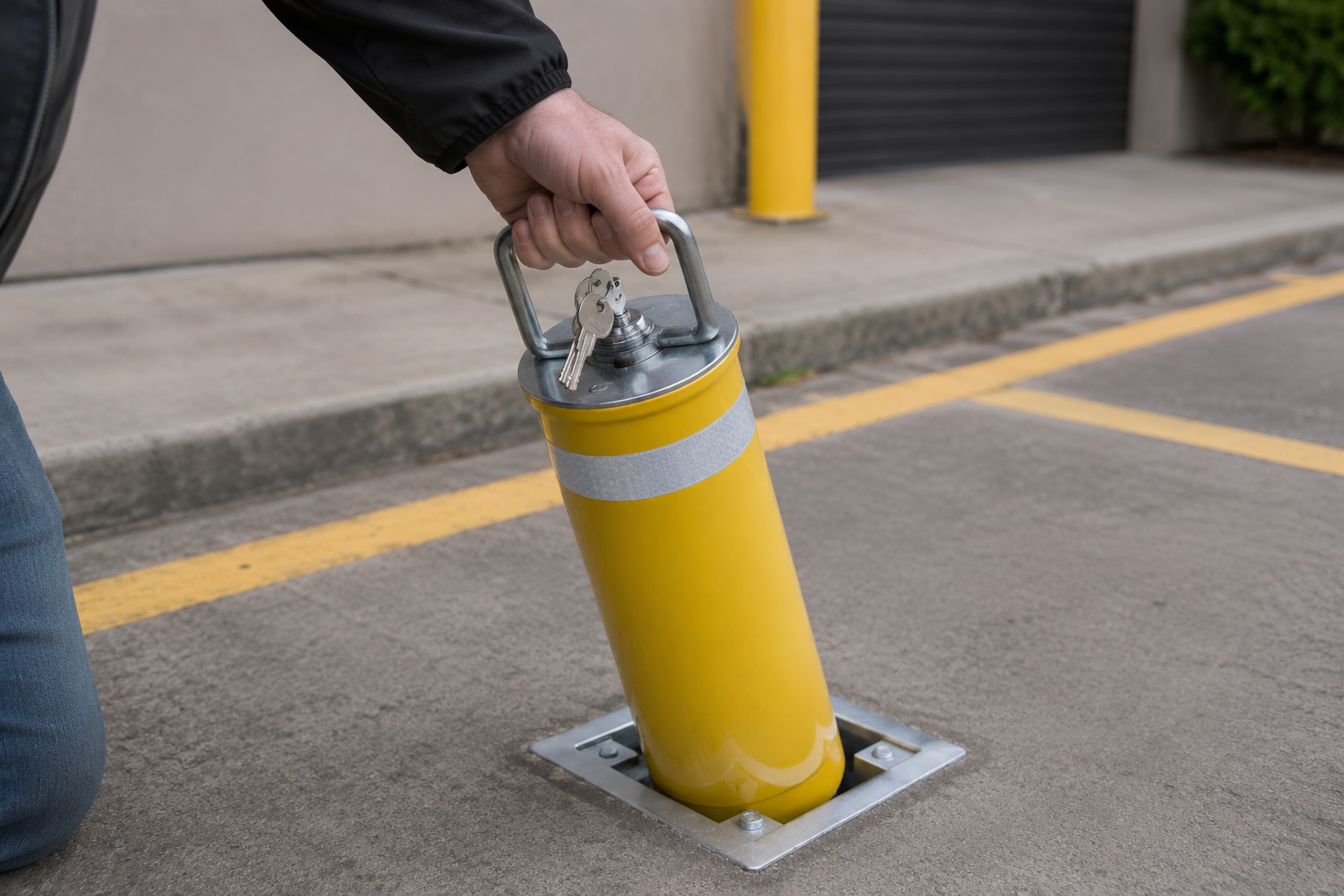
The best bollard for a bay depends on the bay: how the authorised car uses it, what the ground is, and how many people need access. A quick look at the space, or a few photos of the bay and its surface, is usually enough to point to a type and a fixing method.
Send through a photo of the bay you want to keep free, and First Choice can suggest the right bollard and how to fix it, whether the site is in Melbourne or Geelong. Sort it before the next time someone parks where they should not, and the bay is one less thing anyone has to police.