The footpath in front of your shopfront is part of the road reserve, and the council is the responsible road authority for it under the Road Management Act 2004. Tables, chairs, screens and planters can go out only once a permit is issued. City of Melbourne permits are issued under the Activities Local Law 2024 and cover temporary items such as furniture, umbrellas and planters. The City of Greater Geelong runs an outdoor dining permit covering footpaths, laneways, plazas, wharves and on-street parklets. Port Phillip, Yarra and Darebin each run their own schemes.
The permit also carries the paperwork. Councils want a site plan drawn to scale, a certificate of currency for public liability insurance, and an annual fee. Cover differs: Greater Geelong lists at least $10 million for footpath trading, and Darebin requires $20 million for a parklet. Figures move year to year, so confirm yours with your own council.
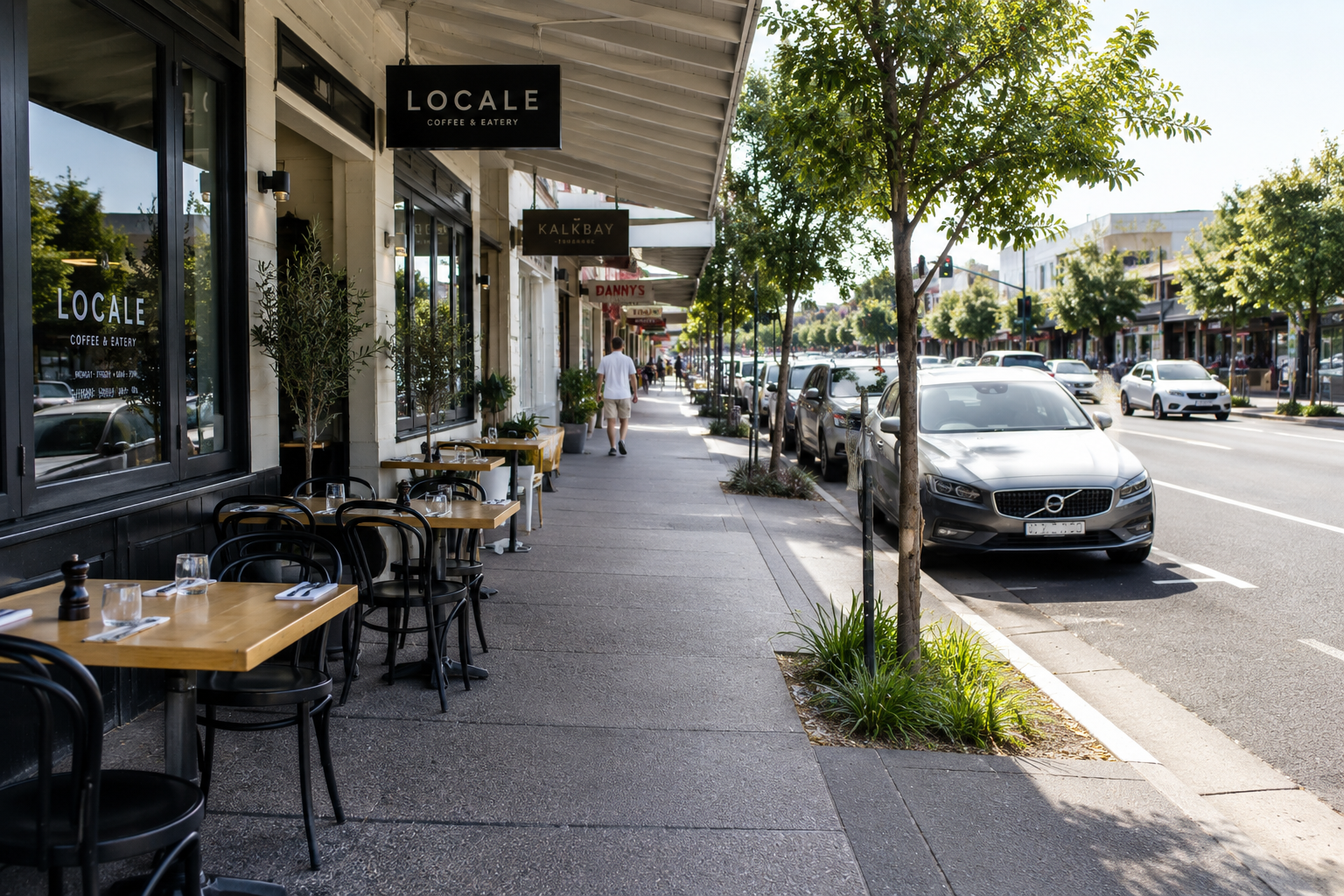
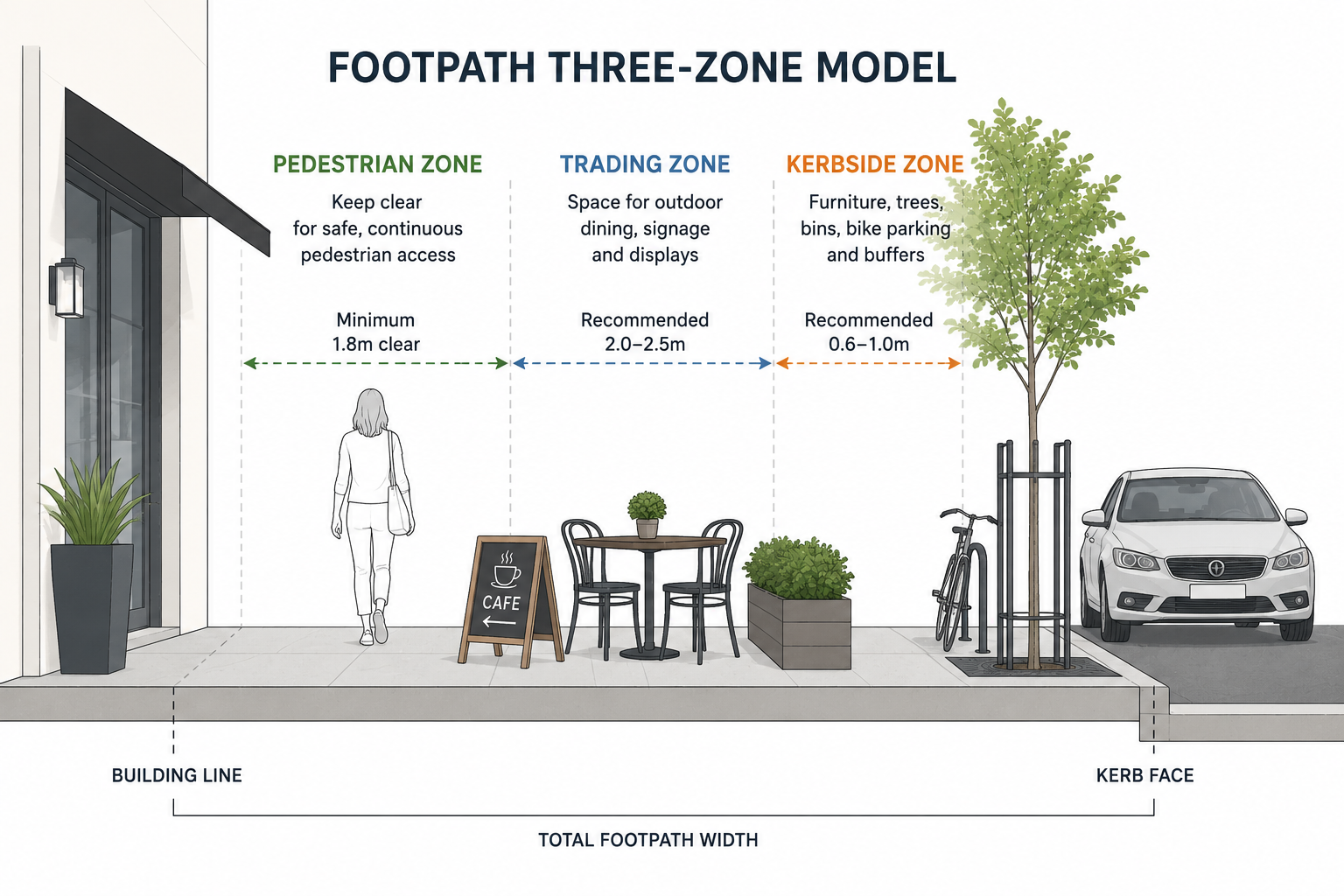
Most Victorian councils split the footpath into three zones, and only one of them is yours to trade in. The City of Greater Geelong policy defines them clearly.
Footpath width decides whether you get a permit at all. Greater Geelong will not approve footpath trading where the footpath measures under 2.9 metres from the kerb face to the building line. Plenty of older shopping strips around Geelong and Melbourne’s inner north sit close to that mark, and once the pedestrian and kerbside zones come out there is little left. Measure your frontage before you plan anything.
Councils also keep the ends of the block clear. Geelong excludes the 10 metres nearest an intersection, the 20 metres nearest a crossing or traffic lights, and the area beside a bus, loading, taxi or no stopping zone.
Barriers themselves are capped low. Darebin’s outdoor dining guidelines allow movable screens and cafe barriers up to 0.9 metres in total height, weighted or locked for stability, and out during business hours only. Fixed glass screens can run to 1.5 metres with approval. A 0.9 metre barrier marks the edge of your dining area. It is not a vehicle barrier, and no council presents it as one.
Generally no, not as a business installation. Two rules get in the way, and both are worth understanding before you spend anything.
There is a route worth knowing about. Councils do install bollards on footpaths as their own infrastructure. Greater Geelong’s policy goes further: where a layout cannot meet the guidelines, the council may work through other options with the business on a cost sharing basis, and it names bollards as one of them. Engineering treatments run on a cost recovery basis, with the applicant paying. Where a dining area carries a real vehicle risk, that conversation with council is the path.
The split at a glance
| The footpath (council land) | Your own land | |
|---|---|---|
| Who approves it | Your council, through an outdoor dining or footpath trading permit | You, or the owners corporation or centre management if the area is common property |
| What you can put there | Tables, chairs, umbrellas, planters and low barriers within the trading zone | Fixed and surface-mount steel bollards, and permanent barriers |
| How it is fixed | Weighted or locked, with any anchoring capped shallow and consented by council | Bolted to an existing slab or set into new concrete |
| When it comes in | Off the footpath at the close of trade, except approved fixed barriers | Stays put |
| What it is for | Marking the dining area and keeping pedestrians moving | Stopping a vehicle before it reaches the tables |
Fixed bollards belong on the land your business controls, and more hospitality sites have that land than owners expect. Four spots come up again and again. For a broader look at commercial bollards in Melbourne and Geelong, including where they are commonly used, see the related guide.
Two decisions follow. The first is diameter. A 90mm bollard suits delineation and light contact. A 114mm bollard puts more steel in the path of delivery vehicles and reversing utes, and permanent fixed models stand taller, which matters when a driver has to see one over a bonnet. The second is fixing. Surface-mount bollards bolt to an existing slab through a base plate, which suits a forecourt with services or waterproofing underneath. In-ground bollards are set into new concrete and take more force before they move.
Finish matters more here than it does in a car park. White with a red reflective band is what a driver picks up under headlights on a wet night, with tables still occupied. Darker finishes photograph well and disappear at the moment they need to be seen.
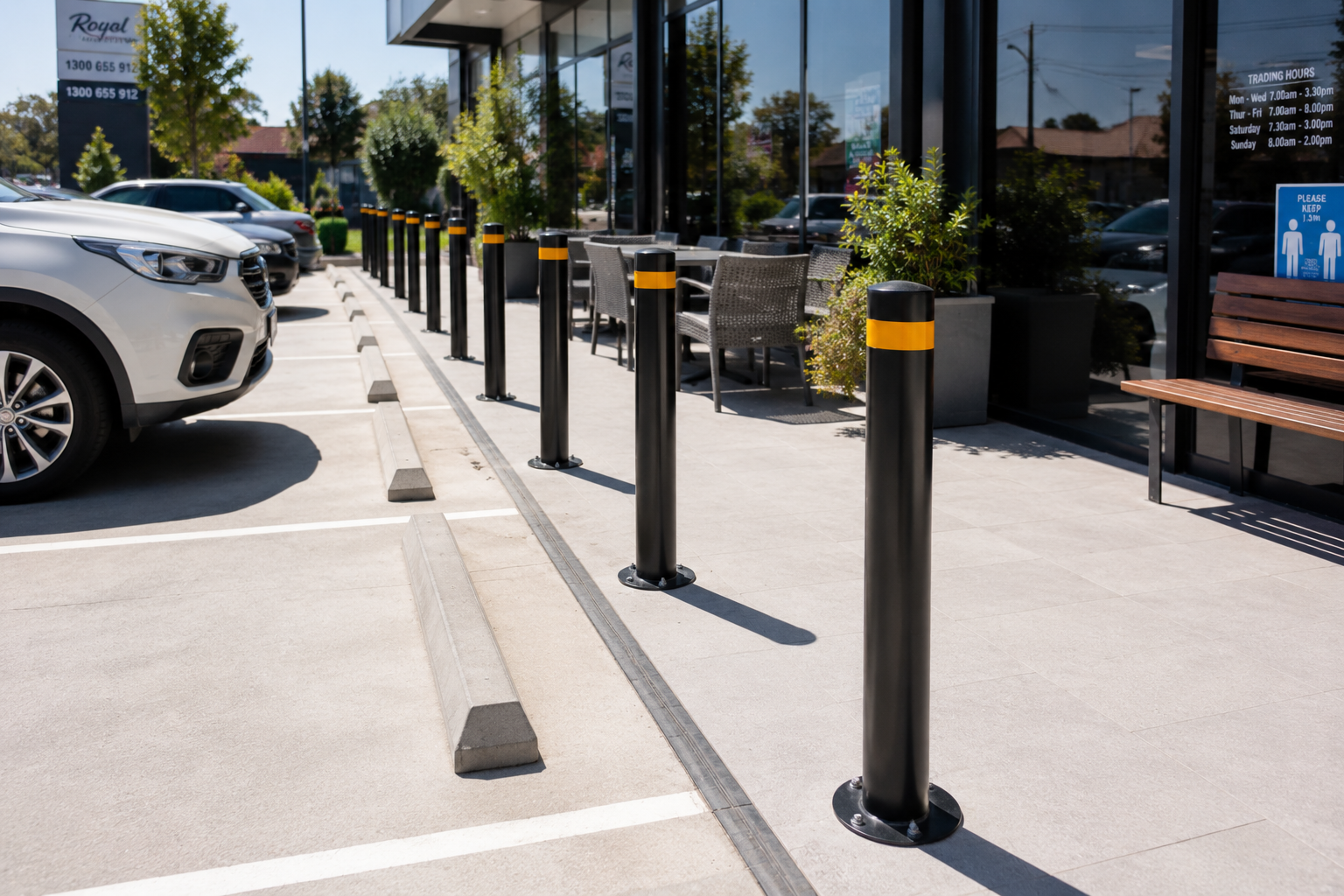
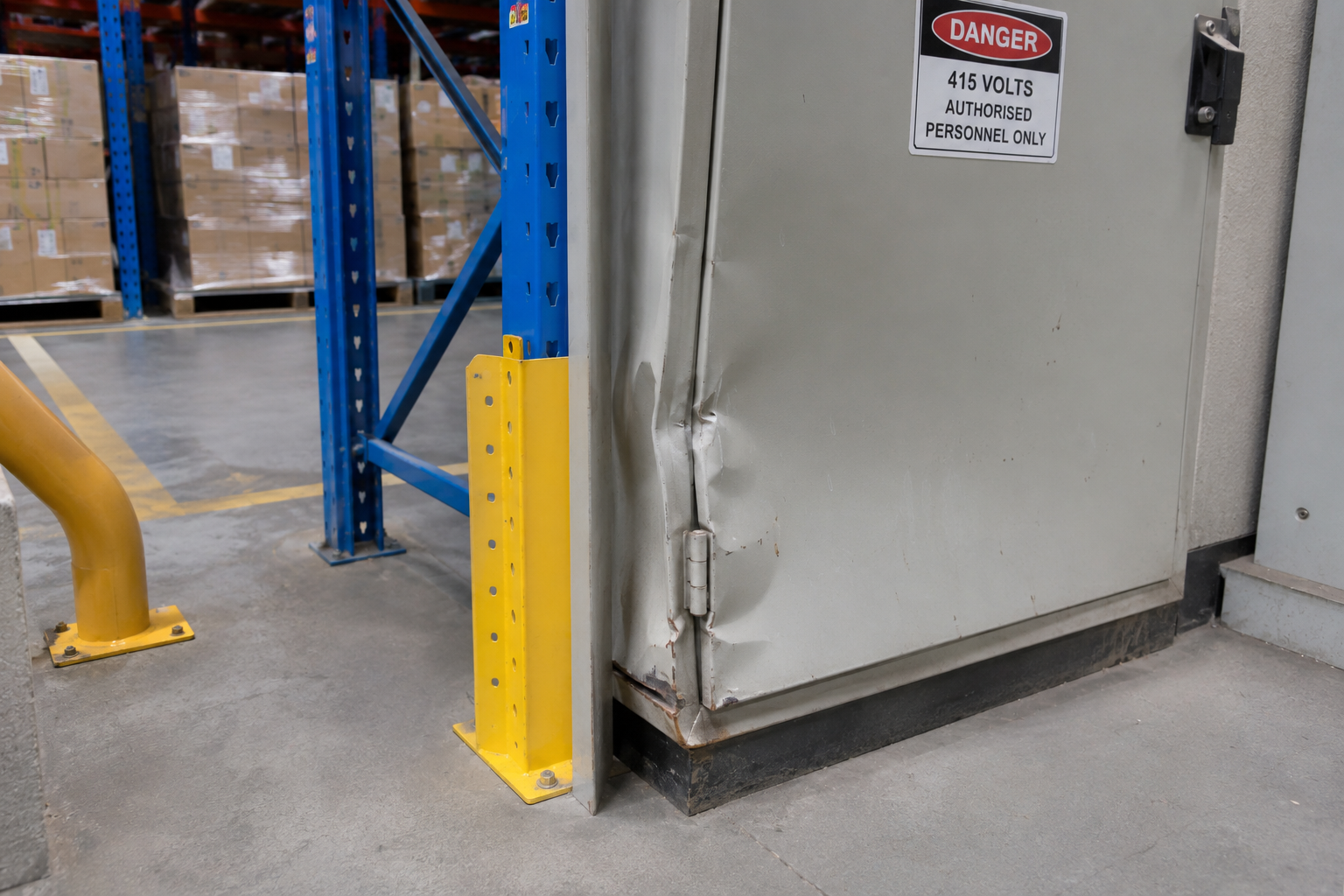
A standard steel bollard does two jobs. It marks a line drivers can see, and it absorbs low-speed contact. That covers most of what goes wrong outside a cafe: a van reversing, a foot slipping off a brake pedal, a driver misjudging an angled bay.
What it does not do is stop a vehicle driven deliberately at speed. Crash-rated bollards, the category used for hostile vehicle mitigation, are a separate engineered product. They are physically crash tested, rated at a stated vehicle weight and impact speed, and rely on foundations designed for that rating. A standard steel bollard is a different product and should never be sold as one. A site needing that level of protection needs a specialist supplier and engineering input.
For most dining areas the test is simpler. Look at the speed vehicles reach where they come closest to the tables. Car park aisles and kerbside bays involve creeping, reversing and three-point turns. That is the risk standard bollards are built for, and the one that damages property most often.
Timing is the part that catches people out. The City of Melbourne states that footpath permit applications take 20 to 30 business days to be issued, and parklet applications 30 to 45 business days, before any back-and-forth over documents. A spring set-up is a winter conversation. The work behind your boundary has no such queue, so the two jobs are worth running as separate projects.
Send through photos of the dining area, the frontage and any driveway or car park edge nearby, with where you understand the boundary to run. First Choice Bollards can tell you what suits the private-land side while your council application is still moving. If you’re ready to discuss the protection required, get a bollard quote.