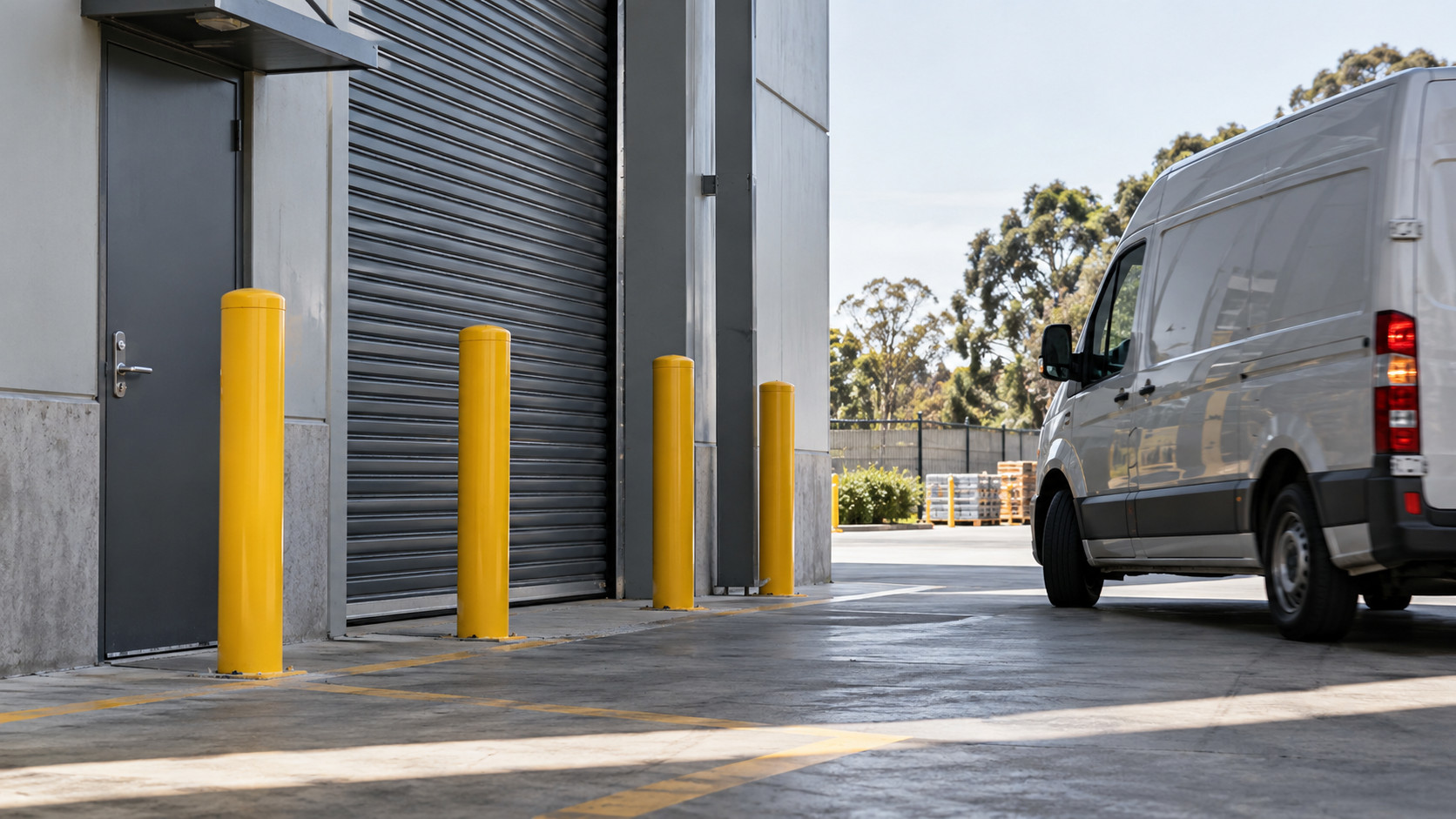
A standard steel bollard stops the everyday things that go wrong on a site. A car rolling with nobody in it. A van reversing too far. A foot slipping off a brake pedal. Security bollards do that because the force runs down the post and into the concrete below. The ground does most of the work. They are not built to stop a vehicle driven at a building on purpose. The product for that job has been crash tested against a stated vehicle weight and speed. It is a different thing to buy.
Most people ask after something has already happened. A truck clips the roller door, or a car rolls down a driveway into a fence. The useful answer has two halves, and the second is the one nobody puts in a brochure.
It depends on how the car arrives. Three cases cover almost every site, and a standard steel post answers them differently.
Warehouse and facility managers, shop owners and homeowners protecting a garage or a caravan all arrive at the same line. Around the industrial estates at Sunshine North and Tullamarine, the damage security bollards prevent is more often a reversing truck than a crime.
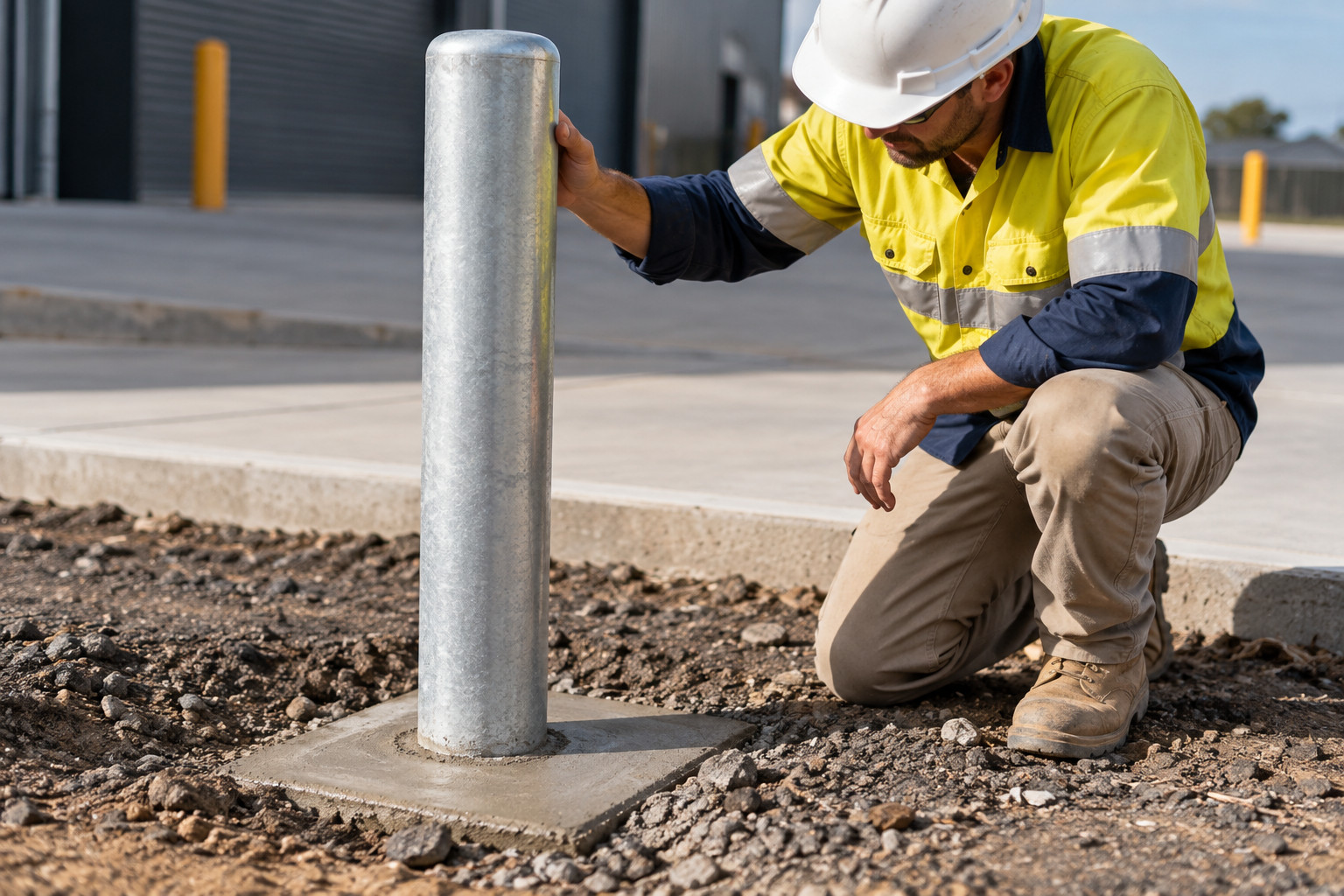
The ground, most of the time. A bollard moves the force of an impact out of the steel and into the concrete around its base. The post is the part you can see. The footing is the part doing the work.
A smaller post set deep in a well tied footing will beat a bigger post in a shallow pad. The part you cannot inspect once the concrete has gone off is the part that decides the outcome. So ask about the installation method in a quotation, not just the product. Which diameter to pick, 90 mm or 114 mm, is a separate decision, and there is a full guide to bollard sizes and wall thickness.
A removable bollard follows the same rule. The sleeve it drops into is set in the ground like any other footing. That is also why a post can look straight after a hit while the concrete around it has cracked.
Street-facing commercial sites carry more of this detail than a driveway does, and the article on security bollards for car dealerships works through it. On a leased shopfront there is a second question: who pays. That answer sits in the lease rather than in the quote, and there is a guide to retail bollards and who pays under your lease.
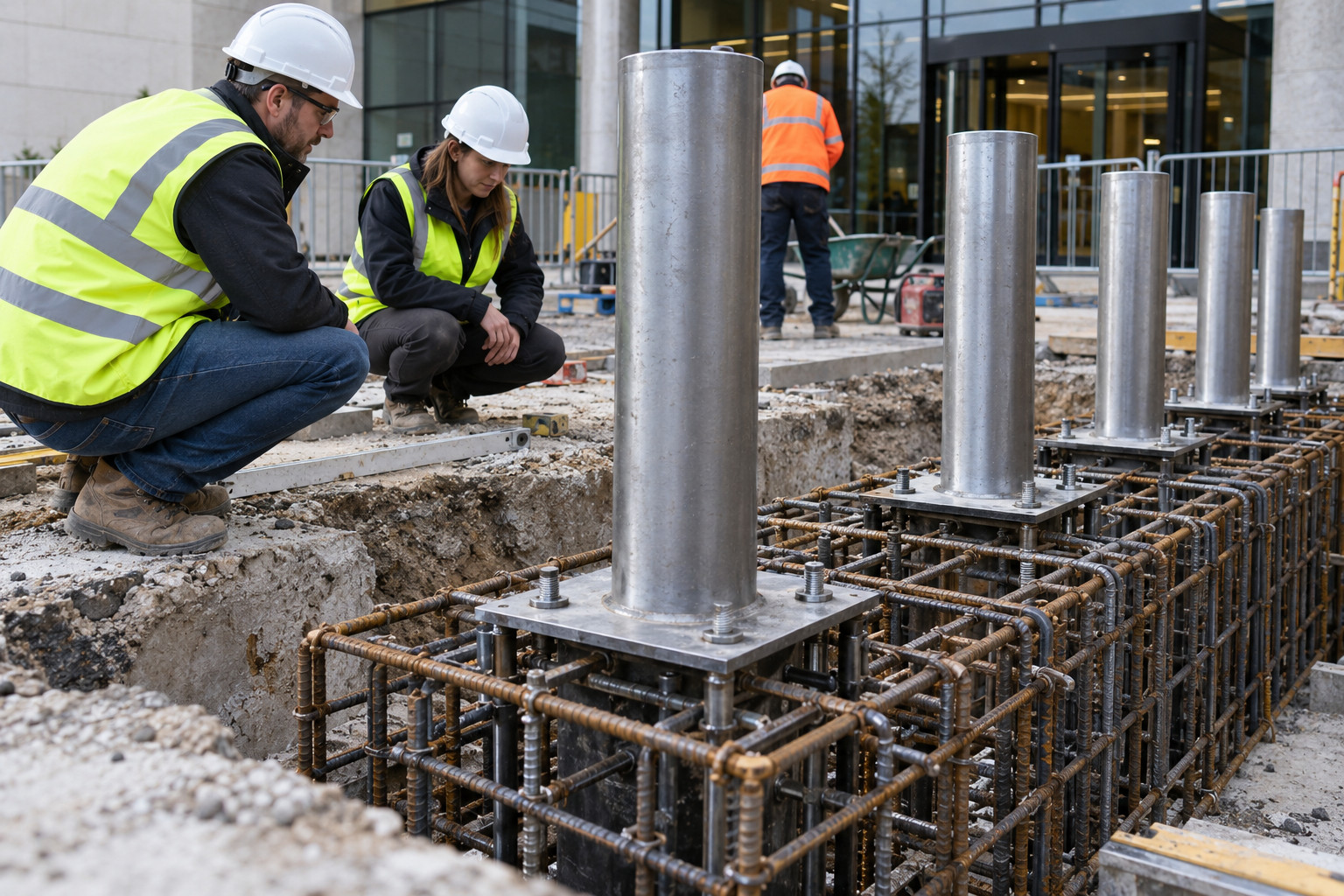
A crash-rated bollard has been physically crash tested. A real vehicle of a stated weight is driven into it at a stated speed. The result is recorded as a rating.
The rating belongs to the whole tested assembly, not to the post on its own. The foundation was part of the test. A rated post dropped into an unrated footing is not a rated installation.
A rating also describes one set of conditions: that vehicle, that speed, that point of impact. Your site may not match any of them. A crash-rated bollard is not a stronger version of the same post. It is a different product, engineered and installed as a system.
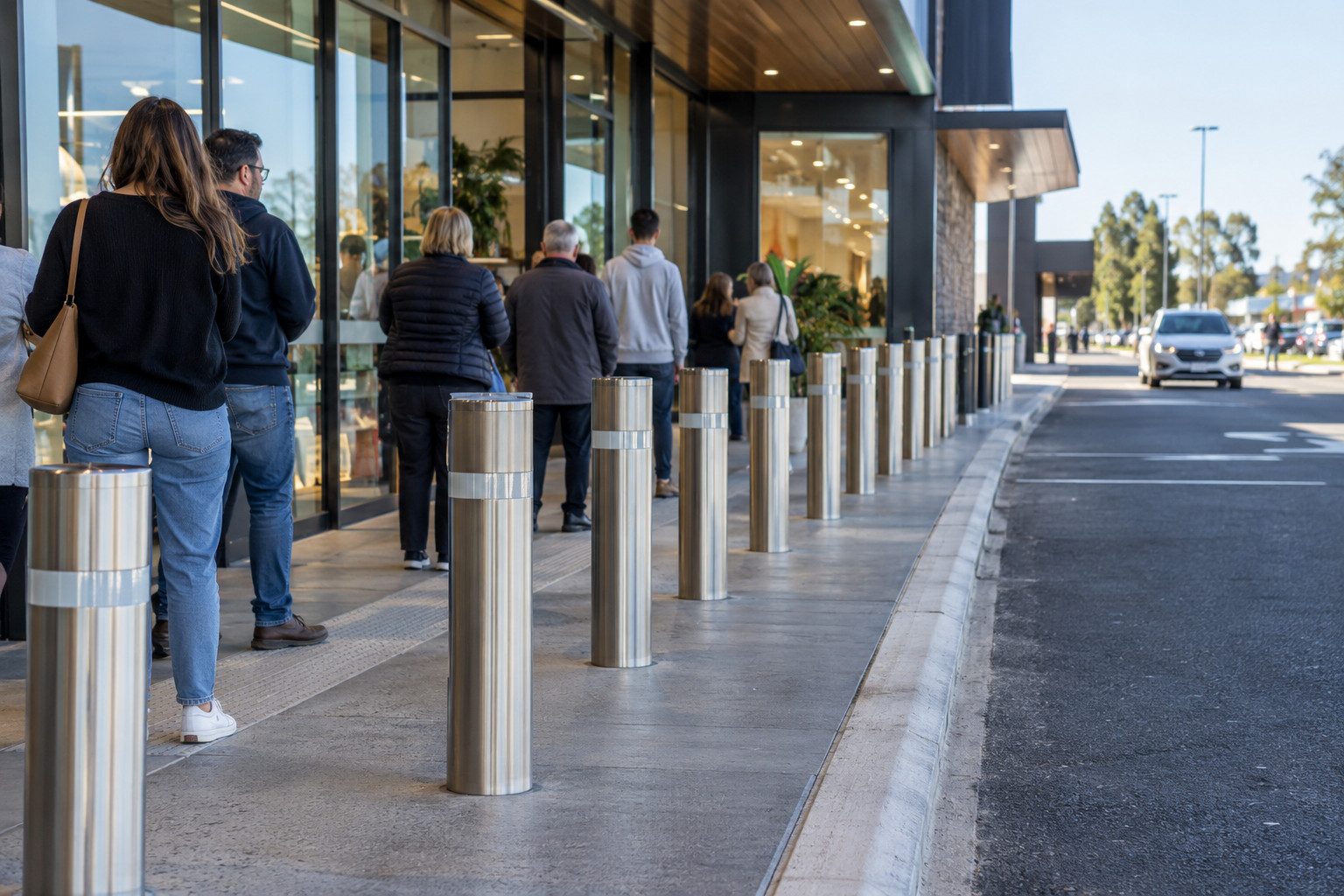
Most sites do not, and most sites should not pay for one.
The sites that do usually have one of four things. A street-facing glass frontage on a format that gets targeted. A long straight approach that lets a vehicle build speed. A security requirement written in by an insurer, a landlord or a government tenant. Or people standing between the traffic and the door, like a queue or a seating area.
If that is your site, the next step is not a bigger post off a shelf. It is a supplier who works in crash-rated product, and engineering input on the foundation.
Both mistakes cost money. Over-specifying buys a rating you will never call on, and the footing that earns it digs up more of your yard than you expected. Under-specifying is worse. You pay for protection that was never going to hold, and you find out on the one day it mattered.
These are two different claims, and a specification sheet often blurs them. A product built to a standard has been made to a set of requirements. A product tested to a standard has been put through a physical test and given a result.
A standard number on its own does not tell you which of the two happened. It does not even tell you the document is about impact.
Two Australian standards turn up on bollard paperwork. AS 2890.6:2022 is titled Parking facilities, Part 6: Off-street parking for people with disabilities. Its published scope says it ‘specifies minimum requirements for the provision of off-street parking facilities for people with disabilities’. That document is about how accessible parking bays are laid out.
AS/NZS 3845.2:2017 is Road safety barrier systems and devices, Part 2: Road safety devices. Its published scope covers ‘both permanent and temporary safety devices that include bollards’. The list also names sign support poles and devices fitted to trucks. That one is a roads document.
So when a sheet names a standard, ask which part of the series it means and what that part covers. A series named with no part number has not told you how the product behaves when a car hits it. Only a test report does that.
One question sorts this out. If a supplier quotes a rated product, ask what the footing has to be for the rating to mean anything. The rating was earned by the post and the foundation together, so a quote that covers only the post has answered half of it. Send First Choice Bollards a photo of the spot, what hits it and how fast it moves, then ask for a quote on that basis.
Not reliably. A car driven at a building on purpose arrives with far more force than a standard post and its footing were built to take. The crash-rated product is the one built for that case.
Not by itself. What takes the impact is the sleeve set in the ground and the concrete around it. The difference is that the post only does its job while it is in place.
Sometimes, and the post is not the only thing to check. There is a guide on what to do when a bollard gets hit on your site.
It takes the load the post passed down, and it can crack or shift without showing much at the surface. That matters because the footing is what holds the post upright. A post still standing has not proved the ground under it is sound.