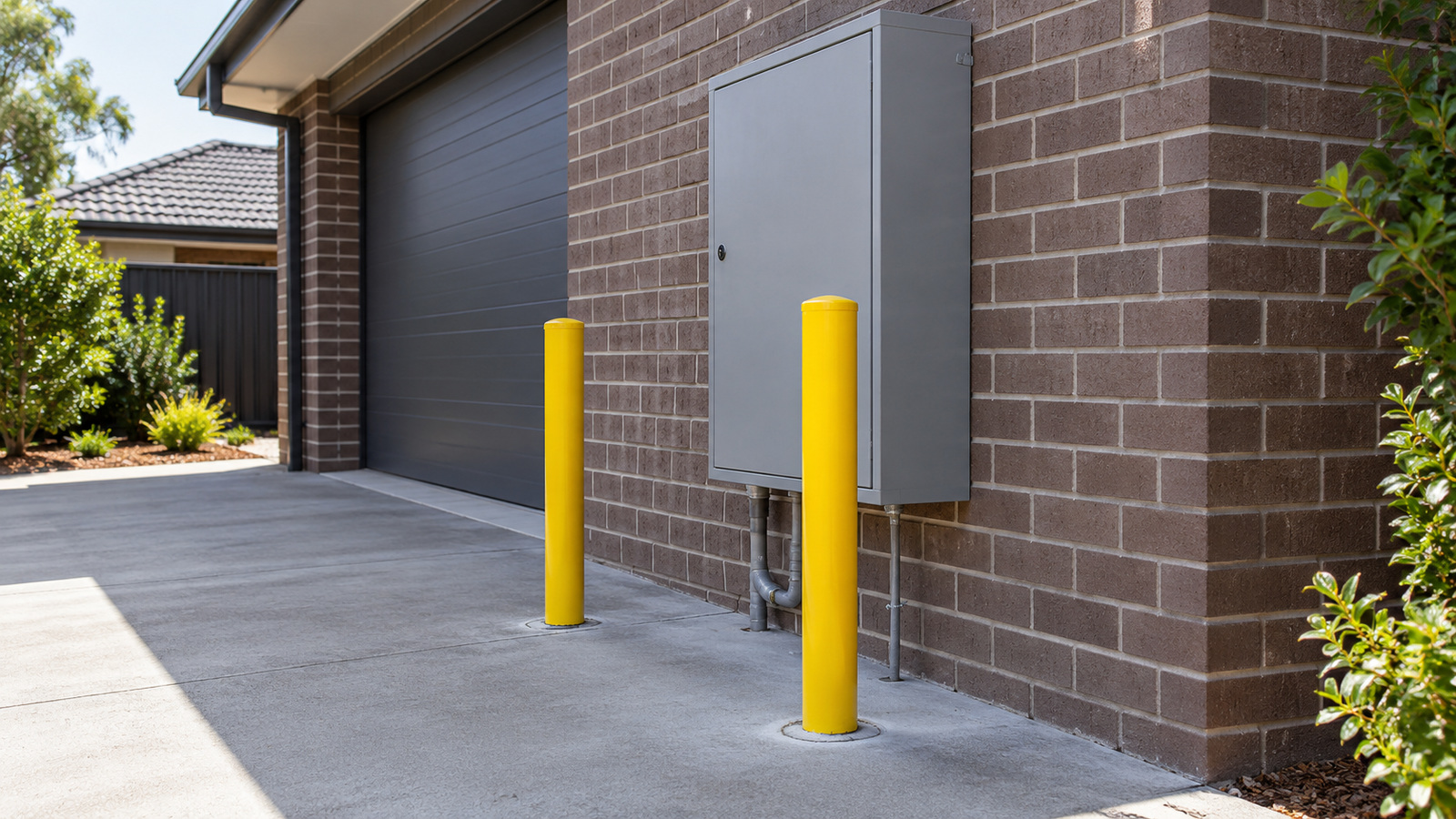
A gas meter or electrical meter box beside a driveway may need vehicle protection. The answer depends on the equipment, the vehicle approach and the responsible provider’s requirements. Identify the service before choosing a post. A proposed barrier must leave the equipment accessible, and a catalogue description does not establish that a model is approved for your installation.
For natural gas, ask your distributor about the meter position and any required protection. For LPG, check with the supplier and the qualified practitioner responsible for the installation. Electrical equipment needs its own assessment, including advice from a licensed electrician and any relevant electricity or metering provider. A rule for one service cannot settle the others.
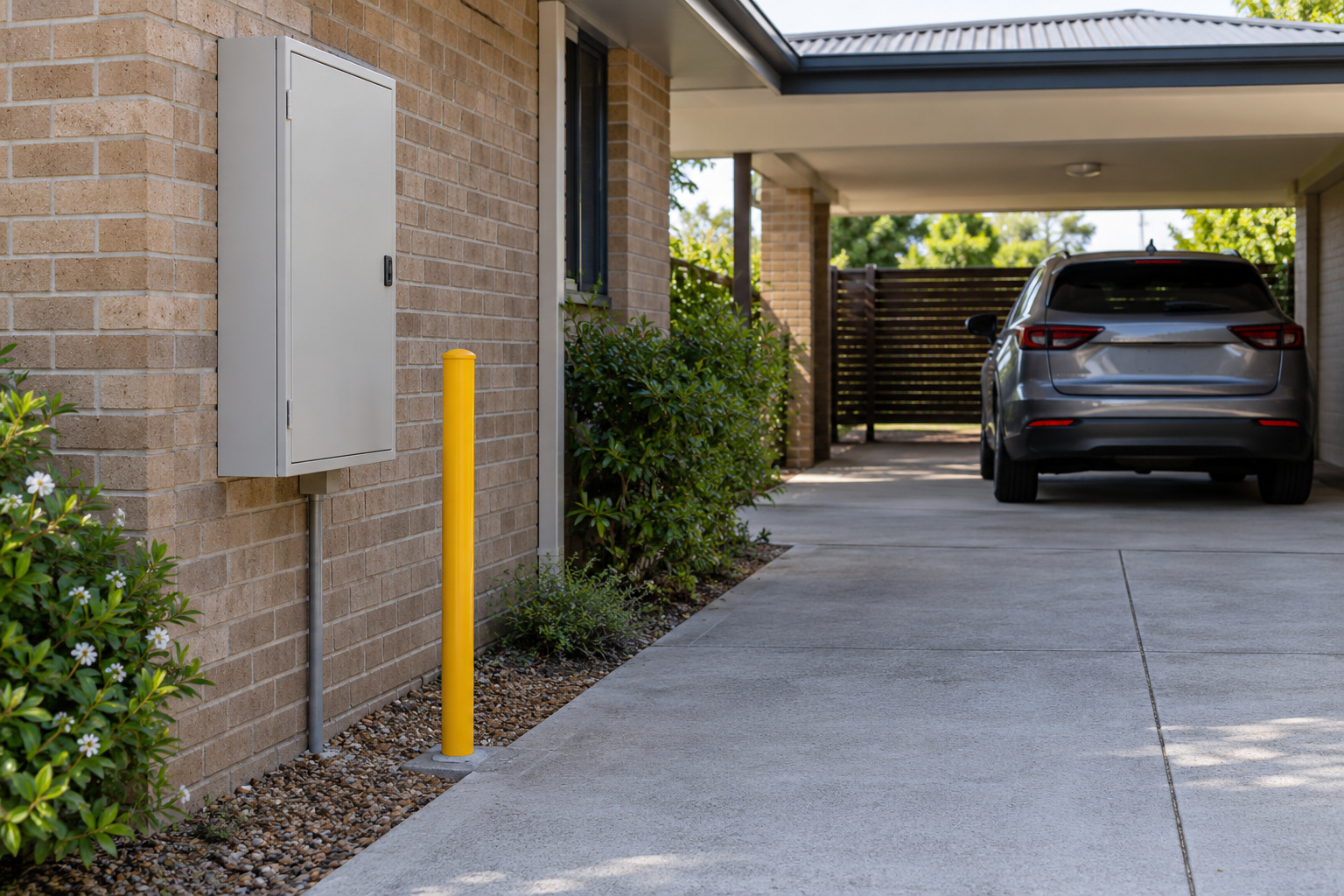
Look at where vehicles enter, turn and park in relation to the equipment. A meter beside a driveway, a cabinet near a carport opening and cylinders beside a parking area present different layouts. These are possible situations, not a reason to assume every home needs the same barrier.
Keep the three service types distinct:
A wall or cabinet can conceal part of the installation, so a view from the driveway is not enough to identify everything involved. Note the equipment and the vehicle approach without opening, moving or testing a service.
Whether an EV charger needs bollard protection is a separate question. Chargers and batteries should not be treated as meter boxes or used to supply the rules for a gas installation.
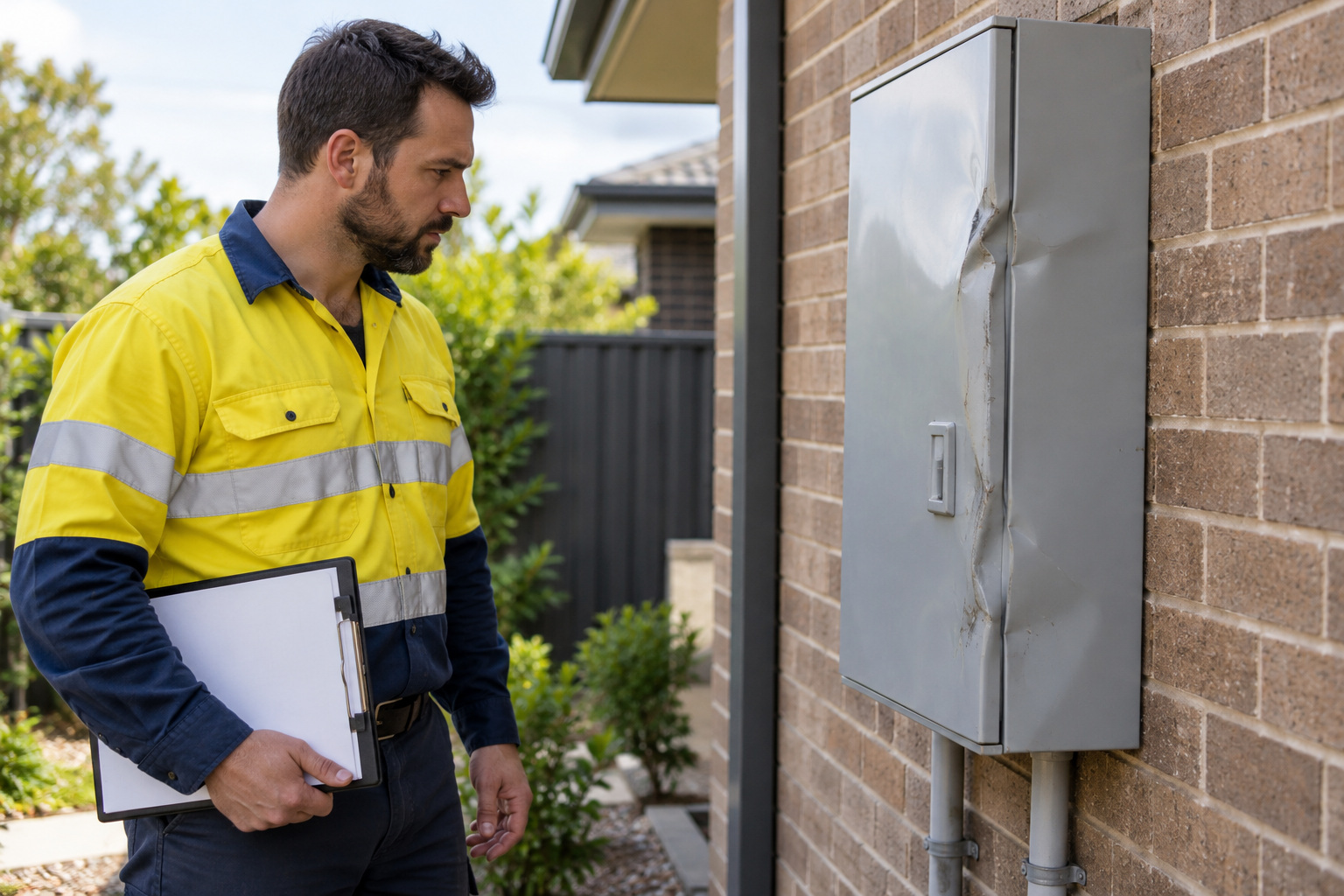
An enclosure’s appearance cannot establish that the equipment or connections inside are safe after a knock. Installing a post does not repair damage. Leave assessment and repairs to the responsible provider and appropriately qualified trades.
Victorian gasfitting work includes installation and repair on the downstream side of the gas supply point, within the defined scope of that work. The Building and Plumbing Commission distinguishes registered and licensed practitioners. Licensed practitioners also issue compliance certificates where required. That does not make every part of a network meter a homeowner’s repair job.
Energy Safe Victoria requires licensed electrical workers for electrical installation work and a Certificate of Electrical Safety for that work. Electrical installation work classed as prescribed also needs an independent licensed electrical inspector. Choosing a bollard does not authorise someone to work on a meter box’s electrical installation.
For a suspected natural-gas escape, Energy Safe Victoria’s gas emergency guidance directs people to contact their distributor immediately. Keep the emergency contact from your gas bill available. LPG customers need their supplier’s emergency contact.
Keep people clear of the affected area and avoid potential ignition sources. If there is immediate danger, call Triple Zero (000) from a safe location. Where a gas escape is suspected, seek that emergency response rather than a bollard quote or a diagnosis from a photograph.
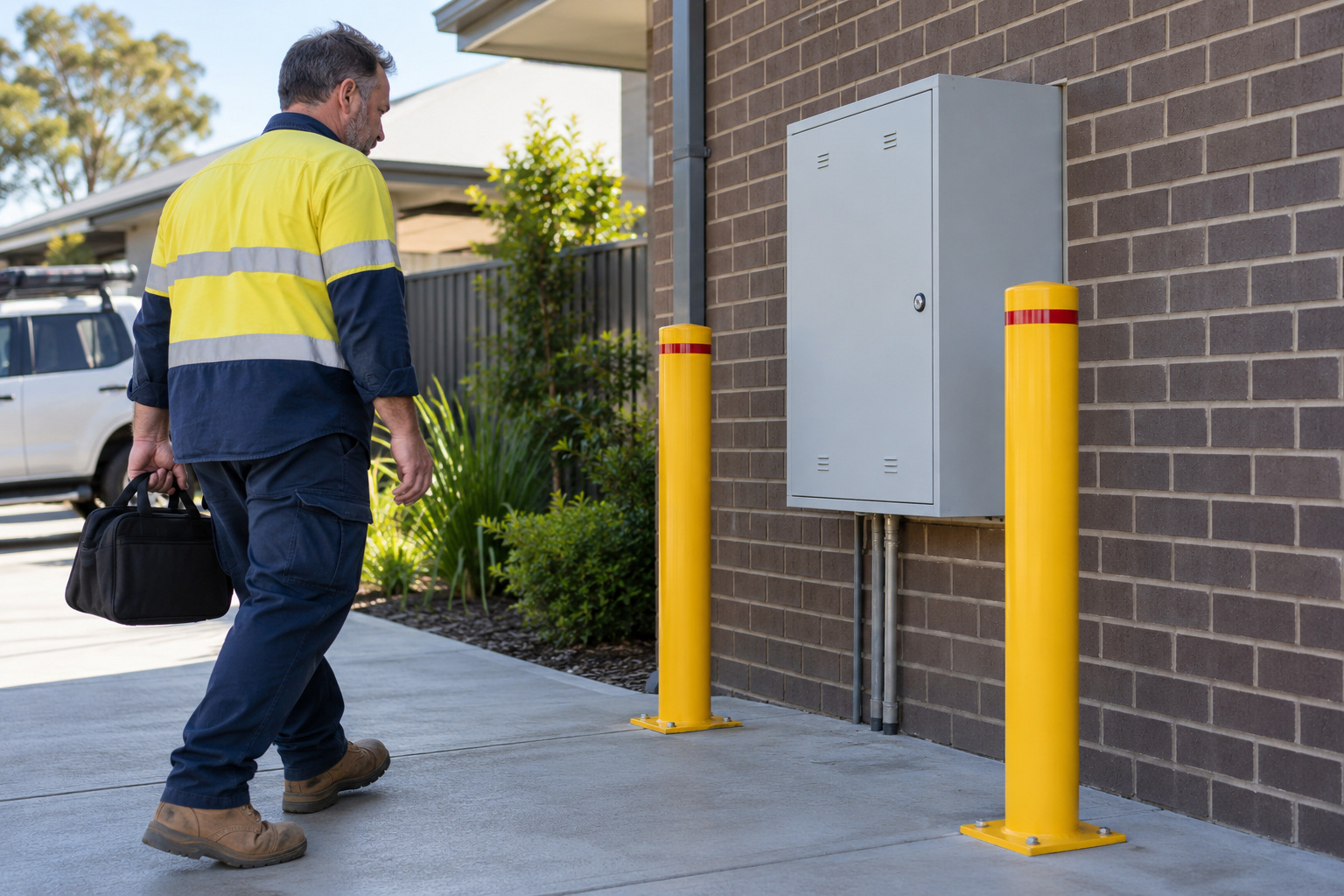
Consider vehicle exposure and service access together. A post on a possible approach line may also block a cabinet door, obscure a reading or prevent maintenance. Moving it aside could leave the equipment exposed again. Neither compromise is resolved simply by finding room for a post.
For a proposed layout, identify:
Discuss those needs with the responsible provider before fixing a product position. The installer also needs to assess the ground and buried services before drilling or excavation.
A Before You Dig Australia enquiry can help identify underground services, but it does not replace on-site checks. A sketch can explain the conflict; it cannot approve the installation.
Multinet’s residential builder information pack gives a specific example. For new residential natural-gas connections within its scope, the network considers alternative meter locations before accepting a bollard as a last resort. It specifies an approved design and requires access for readings, maintenance and replacement.
That guide does not by itself establish the requirements for an existing installation, a commercial or multi-occupancy site, LPG storage or electrical equipment. Identify your own provider and ask which current requirements apply. Do not copy a utility drawing into a different site as an installation plan.
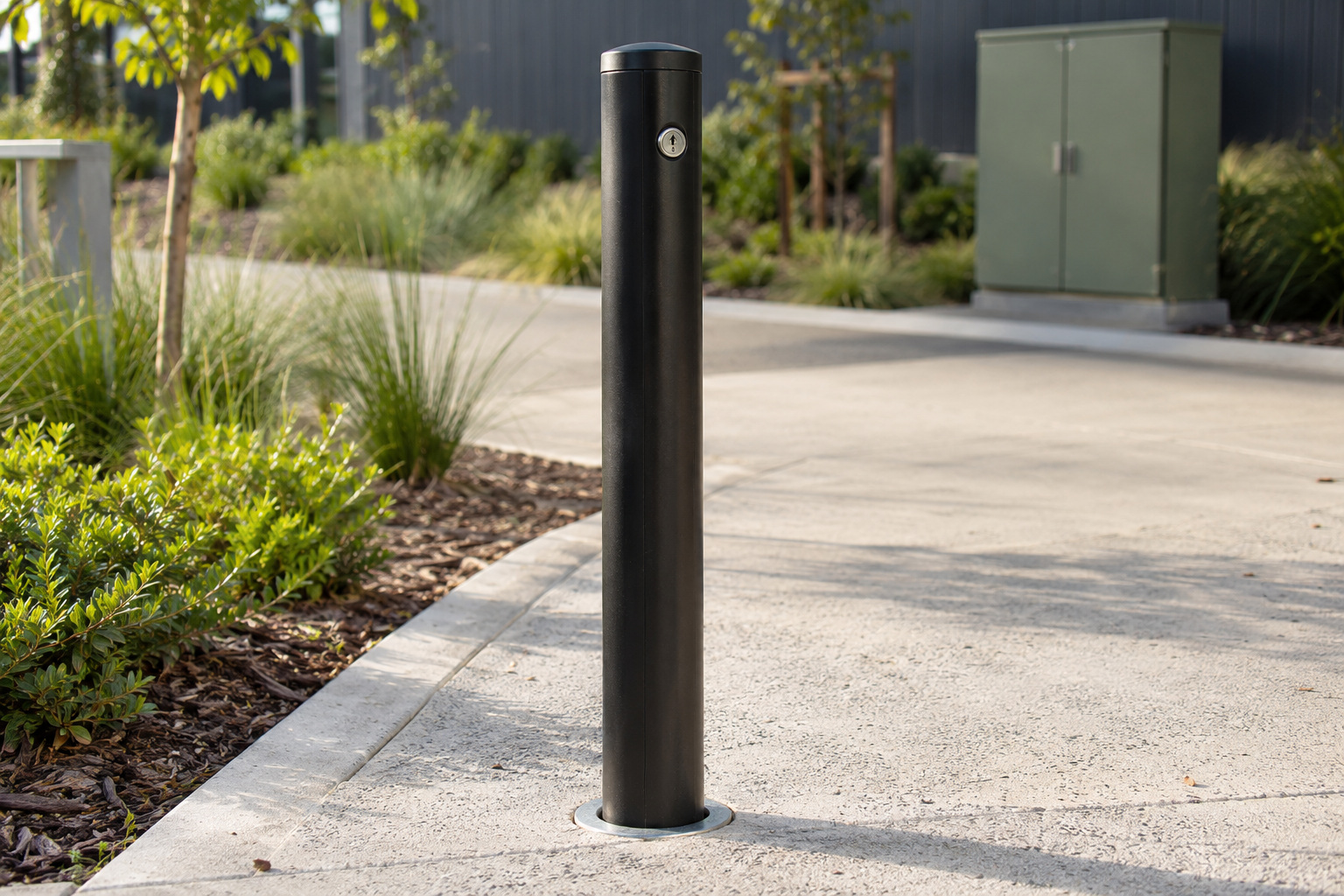
Fixed and removable describe how a post is used. They do not establish whether a network accepts it for meter protection. The published residential range includes LPG Bollards and Electrical Box / Gas Meter Protection Bollards. Those names confirm what First Choice offers; the actual site and provider requirements still determine the suitable design.
For example, its general removable post is 90 mm in diameter and stands 880 mm above ground. The published weights are 12 kg for the 5 mm wall model and 18 kg for the 10 mm wall model. Both specifications list a 210 mm galvanised sleeve.
Those figures describe the product’s size and handling weight. They are not a meter-protection specification, a safe lifting limit or a footing depth. A larger diameter or heavier post cannot be assumed equivalent to a network’s specified design.
A removable model can change access when it is taken out, but that is not permission to remove protection from exposed equipment. Confirm any access arrangement with the responsible provider. Questions about what a bollard will stop need evidence about the particular system, rather than an inference from its weight or finish.
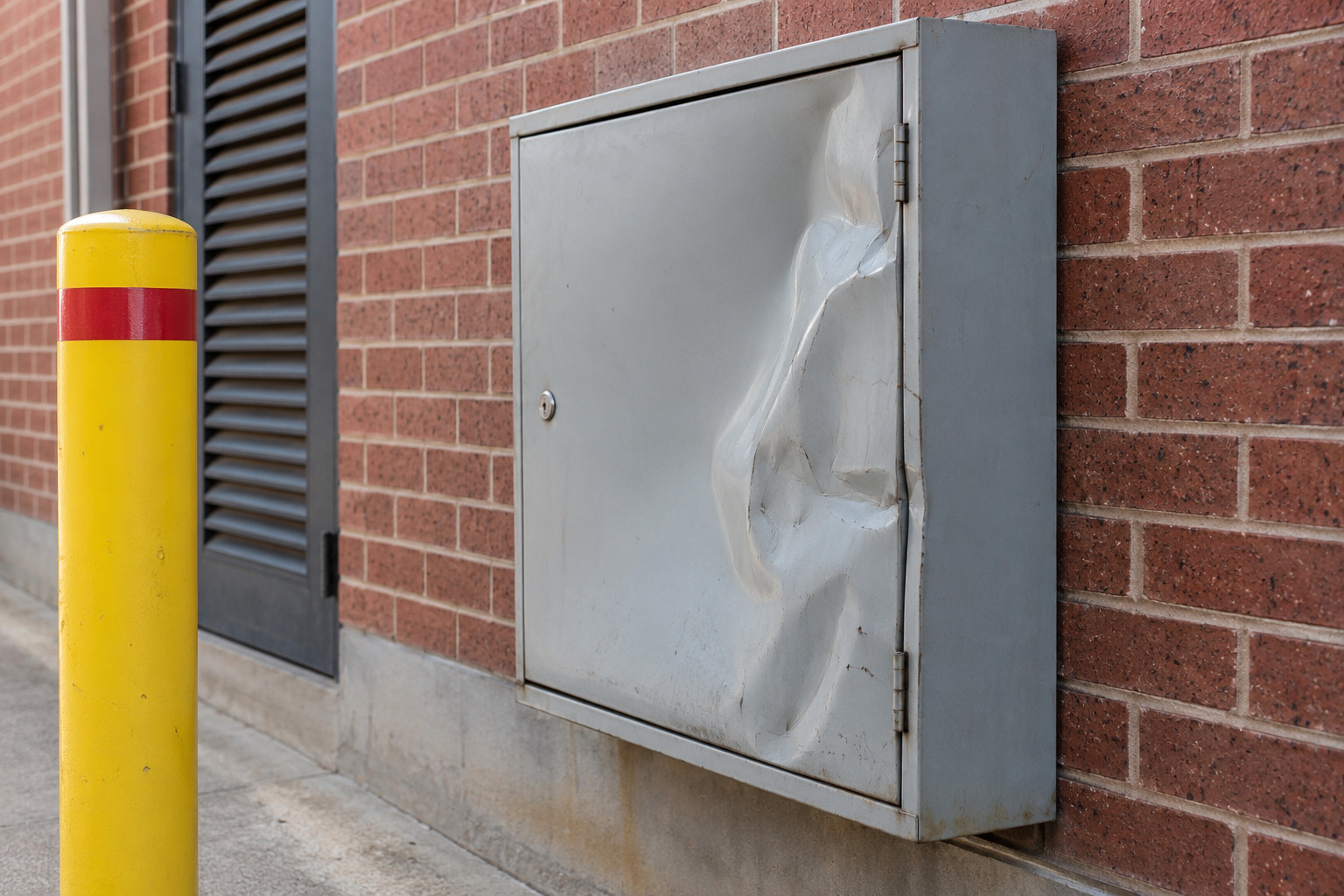
A bollard does not repair damaged equipment, certify the service installation or replace the provider’s approval where required. Its presence alone does not establish stopping performance. It also cannot make a blocked meter door acceptable.
Keep the equipment’s condition separate from the proposed barrier. Energy Safe Victoria advises against using leaking, damaged or corroded LPG cylinders. A natural-gas network drawing cannot establish that LPG storage is suitable, and an electrical certificate does not approve a bollard arrangement.
Once the relevant provider’s requirements are known, ask for a quote on the proposed protection and access needs. First Choice Bollards supplies and installs across Melbourne and Geelong. Describe the equipment and the vehicle approach in the enquiry; choosing the post follows the assessment, rather than replacing it.
Check the responsible provider’s requirements before installing one. A post must not obstruct the meter, and the provider may require another meter position or a particular design.
No. Being removable explains an access feature, not network acceptance. Check the specified protection and how access will be maintained before selecting that type.
Not automatically. LPG storage needs its own supplier and installation assessment; a guide for a piped natural-gas connection cannot provide that approval.
No. Deal with damaged services through the responsible provider and qualified trade, then assess any proposed barrier under the requirements that apply to the site.